Traveling With POTS Practical Considerations
Practical strategies for managing POTS symptoms during travel and at your destination.
Traveling with POTS is manageable when the plan addresses what travel does to your body. Prolonged sitting, dry cabin air, heat, stress, and disrupted sleep can pile up, so no single travel tip does the whole job. Understanding those pressures makes it easier to prepare, manage symptoms during the journey, and leave enough energy to enjoy the destination.
Why transit environments specifically stress the autonomic nervous system in POTS
POTS is a syndrome involving autonomic, immune, connective tissue, vascular, and neurologic mechanisms, so travel can strain several systems at once. Prolonged sitting reduces leg muscle activity and the return of blood to the heart. When blood vessels already struggle to constrict effectively, pooling becomes harder to compensate for. NeuroSport’s clinical guide links reduced venous return during long flights to lightheadedness, rapid heart rate, brain fog, fatigue, and feeling close to fainting.
Flying adds pressure from the cabin environment. Cabin pressurization creates mild relative hypoxia. This can raise heart rate and sympathetic nervous system activity while worsening exercise intolerance. Dry air also speeds fluid loss, reducing the blood volume needed to maintain circulation when standing. Plain water does not address the whole problem because sodium helps expand blood volume.
Rushing, lifting luggage, prolonged standing, heat, sensory overload, and lost sleep can activate the sympathetic nervous system. For someone with hyperadrenergic POTS, that can mean more tachycardia, sweating, adrenaline surges, and fatigue afterward. At a high-altitude destination, oxygen saturation is lower, breathing takes more work, and the risk of dehydration is higher.
How the diagnostic delay most POTS travelers carry shapes what they face before the trip begins
Many travelers reach this point after years without a diagnosis or after being misdiagnosed. Long delays are common, particularly for women, and can leave people planning trips without coordinated clinical support. Without that support, people often have to plan around what they have learned from day to day. A diagnosis alone cannot tell someone what all their triggers are. Someone whose main problem is low blood volume may need to focus on different things than someone with hyperadrenergic symptoms or connective tissue laxity.
Knowing your triggers and limits helps you work out which travel advice fits, even while you are still learning what those triggers and limits are. If you have a care team, request a pre-trip appointment to review medications, thresholds, and any timing changes needed across time zones. Gradual medication adjustments need a plan before departure.
Put that clinical context into a concise written health summary. Include diagnoses, medications, current triggers, and what helps, so staff can understand your needs and emergency responders have useful information. Keep the summary accessible during the journey. A medical ID bracelet or card provides another way to communicate when you cannot, especially when traveling solo or when fainting is a risk.
Building the energy reserve before departure: pre-travel pacing as a clinical strategy
Departure-day capacity depends partly on the days before it. Pacing treats energy management as part of symptom management. Spoon theory is a simple way to think about the limited energy budget a person has each day. Limited does not mean fixed. What you do before leaving can preserve that budget or exhaust it before the journey begins.
Pacing means working within your current capacity. It is clinically recommended in POTS management, and there is some evidence of benefit in ME/CFS, which can overlap with POTS. The evidence still has limits. Robust trial evidence remains limited, so pacing should not be presented as a guarantee against a flare. Its practical purpose is to avoid the pattern of catching up on better days and paying for it afterward.
Build a buffer by reducing activity in the days before departure. Turn down social plans, do less around the house, and spend more time resting lying down where possible. Hydrate before travel too, despite the excitement of leaving and the pressure to finish everything first, because in-flight drinking can only partly make up for arriving already volume-depleted. Rest belongs in the preparation, rather than being what happens after every other task is done.
What to pack and how to book: the kit and logistics that reduce in-transit risk
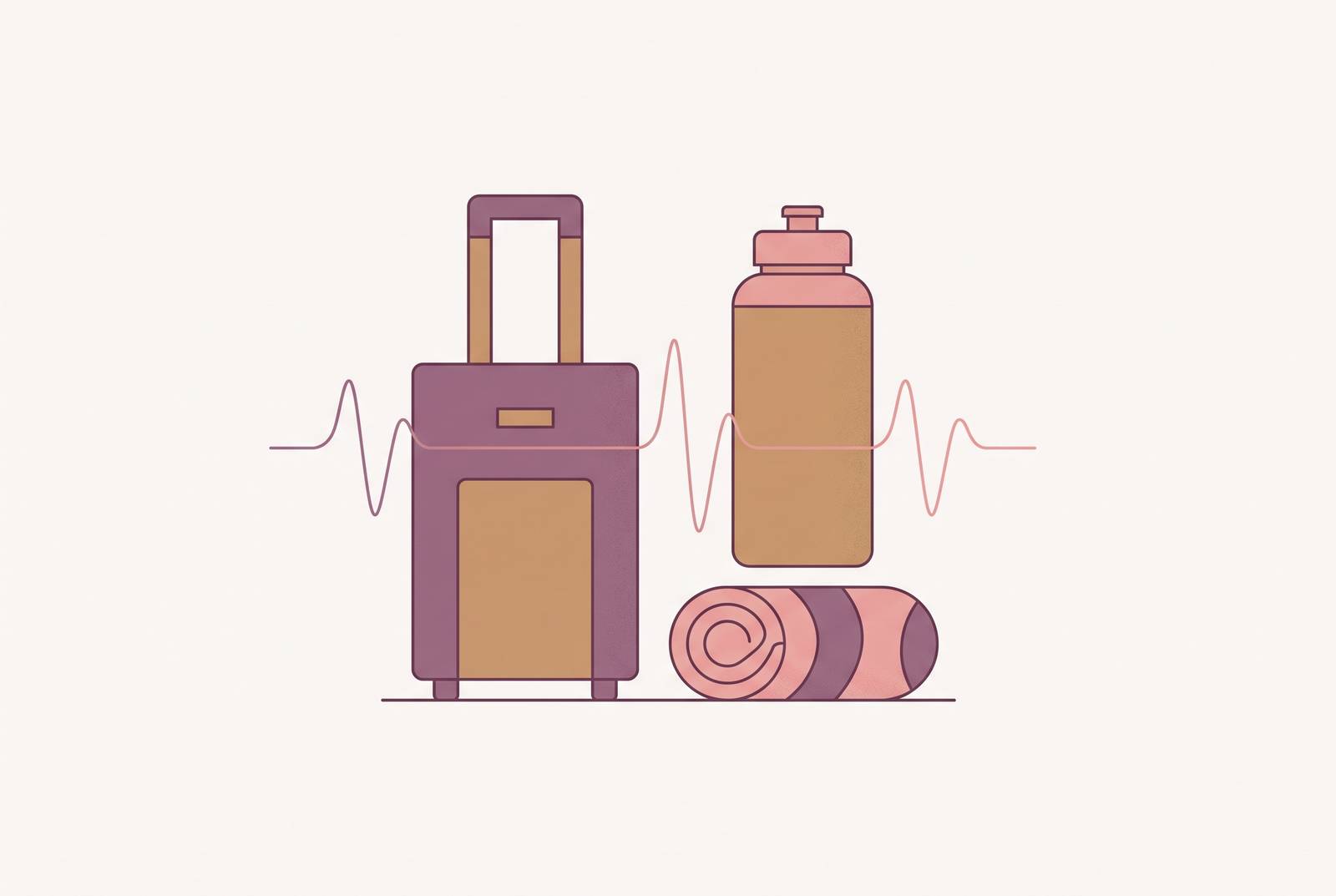
Compression helps with both pooling and comfort. Graduated external pressure supports circulation when blood vessels struggle to constrict. Pack compression socks at minimum, with high-waisted compression leggings offering more coverage. The EDS Clinic recommends moderate to high compression for flights. Electrolyte mixes or salt packets belong in carry-on luggage, together with an empty refillable bottle to fill after security.
Keep hydration and medication supplies within easy reach. Salty snacks provide sodium and low-effort food when meals are delayed. Pack medications in their original containers, with backup doses for disruption or lost luggage. Noise-canceling headphones or earplugs and sunglasses help reduce sensory load. Layers support temperature regulation, while a cooling towel, neck pillow, or seat cushion can help with temperature and positioning.
Nausea supplies can include ginger chews, Sea-Band wristbands, or peppermint. Pack the health summary and medical ID too. For logistics, book an aisle or bulkhead seat that allows leg movement and easier access for walking. Request wheelchair assistance or mobility cart transport when booking to reduce the energy spent walking to the gate and preserve it for the journey.
Arriving early reduces rushing, and notifying the airline in advance gives crew notice that assistance may be needed. The Sunflower Lanyard lets airport staff know about a hidden disability without the wearer having to explain it each time. It can be particularly useful when symptoms are severe or you are traveling alone.
Managing the physiology actively during the flight or journey
During transit, the plan becomes a series of small actions. Move your legs while seated, then stand and walk periodically when it is safe to do so. Walking provides more help with circulation than seated movement alone. During waits, elevate your feet on a backpack, carry-on luggage, or another raised surface to reduce pooling in the legs. An aisle seat makes movement easier to keep up.
Sip electrolyte solution often, even before you feel very thirsty. Thirst can lag behind fluid loss that is already affecting blood volume, so trying to catch up is a weaker strategy than drinking consistently. Use headphones, calming audio, or deep breathing to reduce sensory and stress-related demands. Alarms help you take doses on time when changes in sleep, meals, and time zones take away the usual reminders.
Traveling by car gives you more control over the same basic risks. Stop every one to two hours for short walks and leg stretches, adjusting stops to symptoms when needed. Seat cushions or supports can help while you sit between stops. Long drives still involve pooling and dehydration, even without a pressurized cabin. The flexibility is useful only if the journey leaves room to use it.
Arriving without crashing: pacing the first days at a destination
Feeling reasonably well on arrival is not proof of recovery. Travel can cause autonomic symptoms after arrival, especially if the first days bring another burst of activity. Treat arrival day as a recovery day, with rest already written into the itinerary. Planning it before departure reduces the social pressure to push through. Steady activity within your energy envelope gives enjoyment more room than an early burst followed by collapse.
At altitude, apply that plan more conservatively. Increase hydration and electrolyte intake, maintain compression, avoid overexertion in the first days, and allow more time to acclimatize before demanding activities. The body has to cope with altitude while it is still tired from the journey. A room with a refrigerator makes prepared electrolyte drinks and medications requiring cooling easier to manage. Easy food options and proximity to transport or activities also reduce the effort needed to eat or return to rest.
Protect the routine around the activities as well. Keep sleep as steady as possible and follow the plan for when to take medication that you agreed on before crossing time zones. Build in a quieter day before the return journey to create another buffer. For a flare, identify a suitable medical contact and quiet rest space, and bring extra days of medication and electrolytes. Travel insurance with cancellation and medical evacuation coverage can reduce financial pressure to continue when health calls for stopping.
Adapting these strategies to a demanding environment: lessons from a theme park POTS traveler
A solo traveler with POTS worked out how to manage visits to Walt Disney World over several trips. Her useful change was a split day. She arrived at park opening, left at noon, and rested in air conditioning with her legs elevated through the afternoon. She returned at 6 p.m., when conditions were cooler and less crowded. She found the pattern on her second trip and confirmed its usefulness on her third.
Afternoon rest interrupted accumulating fatigue, while the later return reduced heat exposure. Queues remained a problem of standing tolerance. Staying at a Disney resort gave her transport back to the room without needing an Uber, using options including buses, Skyliner, and boats. The return to rest was part of the plan.
Resort services also provided a practical backup. At Disney’s resort hotels, guests can call the front desk for in-room medical services through AdventHealth, available 8am–8pm, rather than rely on permanently stationed medical staff. The traveler mainly used the Sunflower Lanyard at airports and recommended it for severe POTS to support staff awareness, bus seat priority, and emergency identification when alone. Her account shows a strategy refined through experience.
Tracking symptoms across a trip to identify what is actually affecting you
Tracking is useful when it answers a practical question. The goal is to connect parts of the itinerary with symptoms. Record heart rate across postures, especially after standing or leaving a plane or train, and blood pressure changes after standing or meals. Compare fatigue in the morning and afternoon to find your more usable activity window. For overheating, note when it began, the temperature, and how quickly cooling helped.
Record sleep quality, hydration and sodium intake, and gut symptoms as meal schedules change. These details can help show whether symptoms get worse again and again in the same conditions. An app is useful if it connects patterns across sleep, activity, hydration, and daily circumstances. More data alone is not the goal.
A baseline makes the travel record easier to interpret. Compare symptoms at home, in transit, at the destination, and during recovery after returning. Orthostatic vital signs from standing tests at different times and under different conditions can add shareable clinical information. The recovery period belongs in the record too. Otherwise, a trip that felt manageable at the time may look less demanding than it was.
Using trip data to make the post-travel medical conversation count
Bring the pattern to the appointment. A one-to-two page summary can cover diagnoses, medications, travel-related symptom changes, triggers, recovery time, and what helped or failed to help. Include recorded heart rate and blood pressure changes across postures so the clinician can assess variability under different conditions. Practice a short opening statement with the main findings and questions. Preparing this way makes it easier to explain everything through brain fog.
The 2026 international multidisciplinary expert consensus published in The American Journal of Medicine states that POTS is not caused by anxiety, mood disorders, or avoidance behavior. Stress can worsen symptoms without being their underlying cause. A record of heart rate, blood pressure, and recovery time gives the clinician more than a general report that travel felt stressful. Ask for concerns to be documented clearly in the medical record.
If complications require specialist help, electrophysiologists are among the clinicians who identify and manage POTS. Dysautonomia International and DINET keep lists of physicians that can help people find the care they need. No itinerary can guarantee a symptom-free trip. But preparation and documentation make the next decision better informed, whether that decision is about a rest day, a different route, or a more useful medical plan.