Post-COVID POTS Symptom Patterns
Diagnosing post-COVID POTS requires tracking symptom patterns, not just fatigue.
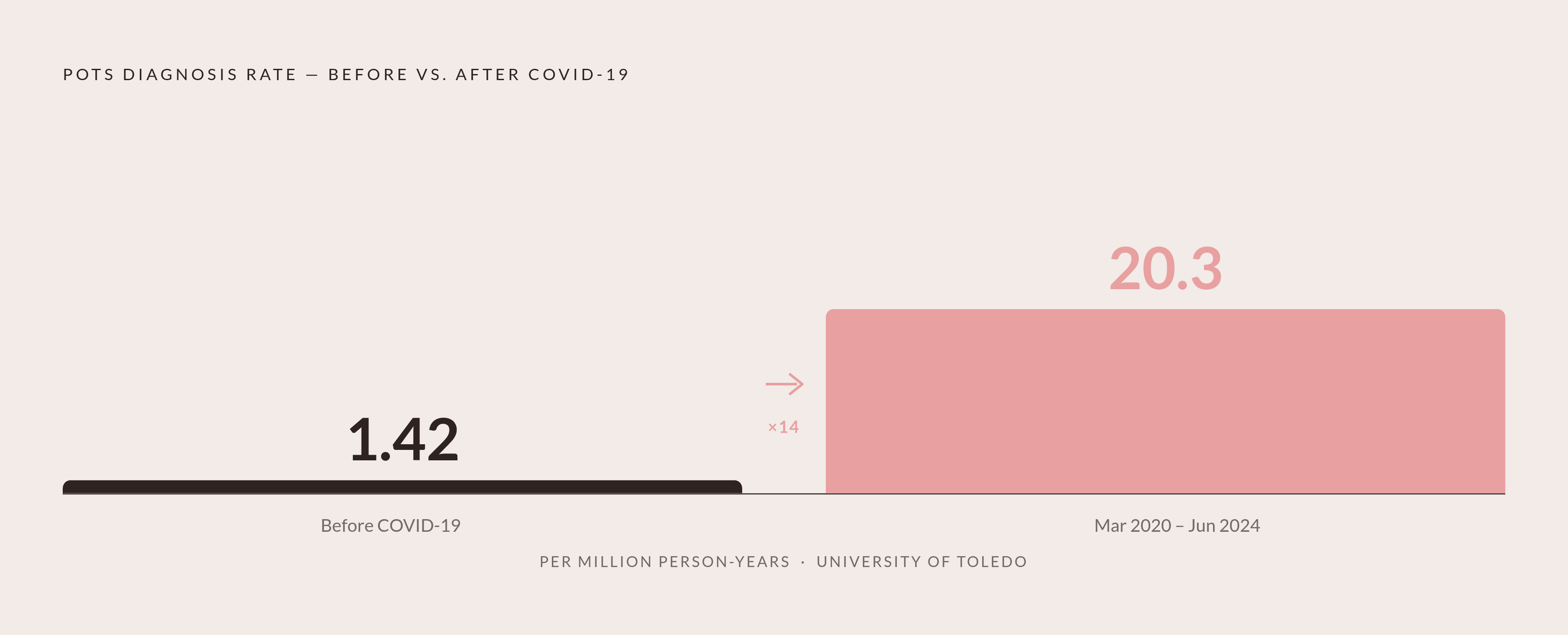
POTS diagnoses in the U.S. jumped roughly tenfold after COVID hit, from 1.42 per million person-years before the pandemic to 20.3 between March 2020 and June 2024, according to a University of Toledo study drawing on a large patient records database. That's not a blip. It's a new patient population most doctors weren't trained to spot, and treating it like ordinary long COVID tiredness is the mistake behind so many delayed diagnoses. The doctors getting this wrong aren't careless, they're pattern-matching to a symptom picture (fatigue, brain fog) that looks a lot like garden-variety long COVID unless someone checks what happens when the patient stands up. This piece breaks down what post-COVID POTS looks like day to day: the symptoms, the triggers, the patterns connecting them, and why tracking those patterns matters more than most patients realize.
What POTS actually is and why posture is central to every symptom
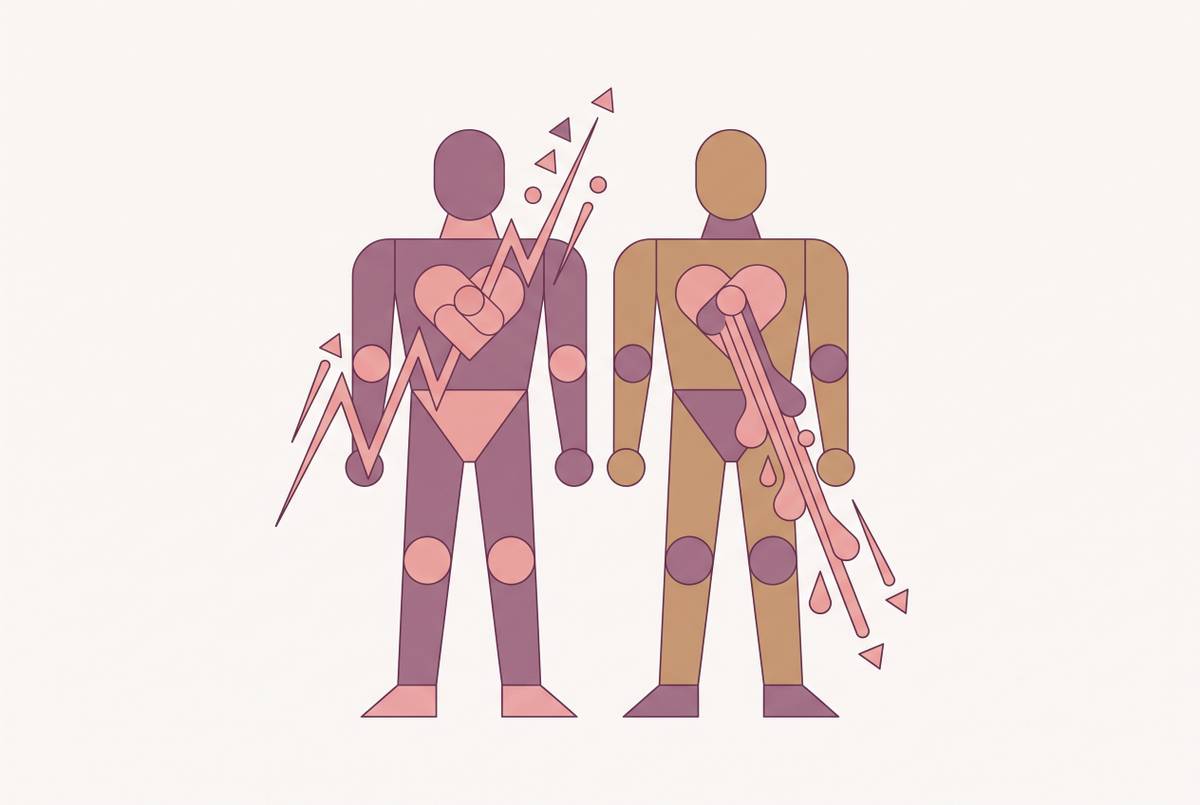
POTS stands for postural orthostatic tachycardia syndrome, and the name gives away the mechanism. Diagnosis requires a heart rate jump of 30 beats per minute or more upon standing, without a matching drop in blood pressure. For patients ages 12 to 19, the bar is 40 beats per minute. Philip Low first described the condition at the Mayo Clinic in 1993, and it's now classified as one of the main forms of orthostatic intolerance: the body's failure to adjust when it moves from lying down to standing up.
Here's what actually goes wrong, stripped down to the plumbing. A healthy body standing up squeezes the blood vessels in the legs and lower body to push blood back toward the heart and brain. In POTS, that squeeze doesn't fire correctly. Blood pools in the legs, less of it reaches where it's needed, and the heart beats faster to make up the difference. That one failure, blood vessels that won't tighten on standing, sits underneath nearly every symptom that follows.
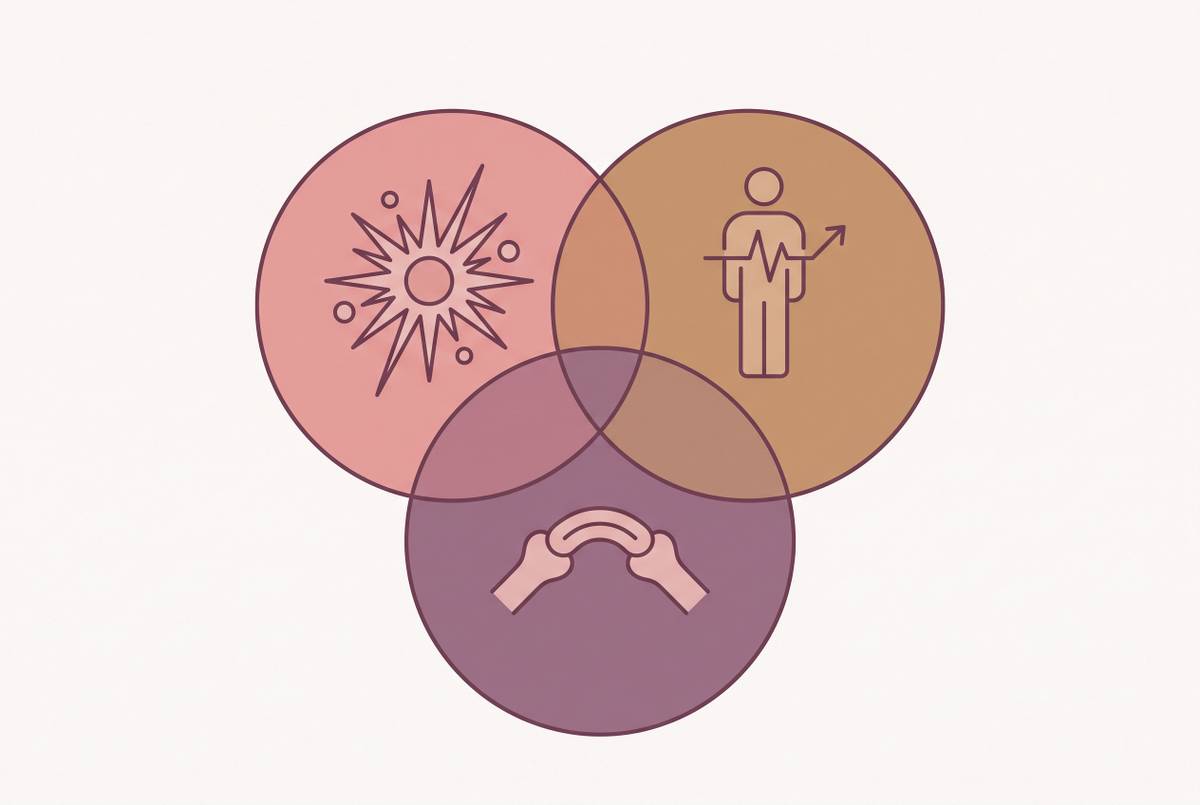
Three subtypes exist: hypovolemic, neuropathic, and hyperadrenergic. They often overlap in the same patient, which is why two people with identical diagnoses can look nothing alike symptom to symptom. Don't confuse POTS with orthostatic hypotension, where blood pressure drops on standing instead of heart rate spiking. POTS skews younger; orthostatic hypotension shows up more in older adults and people with diabetes. Mixing the two up isn't a minor slip. It delays proper treatment, and it happens more than it should, even among clinicians who see this daily.
Posture isn't a footnote here. It's the organizing idea behind everything else in this piece. Once a patient sees standing as the trigger, a confusing pile of unrelated symptoms starts to look like one problem instead of a dozen separate mysteries.
The core symptom cluster patients describe and what triggers each one
Palpitations top the list, and they're usually what actually gets someone into a doctor's office in the first place. A racing or pounding heart is hard to ignore. Fatigue runs a close second, and this isn't the tired-after-a-long-day kind. It's whole-body exhaustion that a nap or a full night's sleep doesn't touch.
Beyond those two: dizziness on standing (the most direct orthostatic symptom), exercise intolerance (activity that used to be easy suddenly isn't), heat intolerance (temperature control runs through the same nervous system that's already struggling), and brain fog, losing words mid-sentence, a kind of mental slowness that shows up out of nowhere. Internal tremors show up too, and patients often struggle to put them into words a doctor will latch onto.
Tinnitus, sudden chest pain, skin mottling in the legs (livedo reticularis), dry eyes, and migraine round out the list. Autonomic symptom burden across long COVID patients runs high, and it shows up repeatedly across documented patient groups.
What makes this list disorienting is the spread: cardiology, neurology, gastroenterology, rheumatology, all pulled in at once. A patient with palpitations, brain fog, and gut trouble might see three or four specialists before anyone connects the dots. The thread tying it together is the postural trigger: most of these symptoms get worse on standing or during activity and ease up, at least somewhat, on lying back down. Spotting that relationship, and writing it down, is the single most useful thing a patient can bring into an appointment. Not the symptom list. The pattern behind it.
How symptoms fluctuate with posture, activity, time of day, and daily context
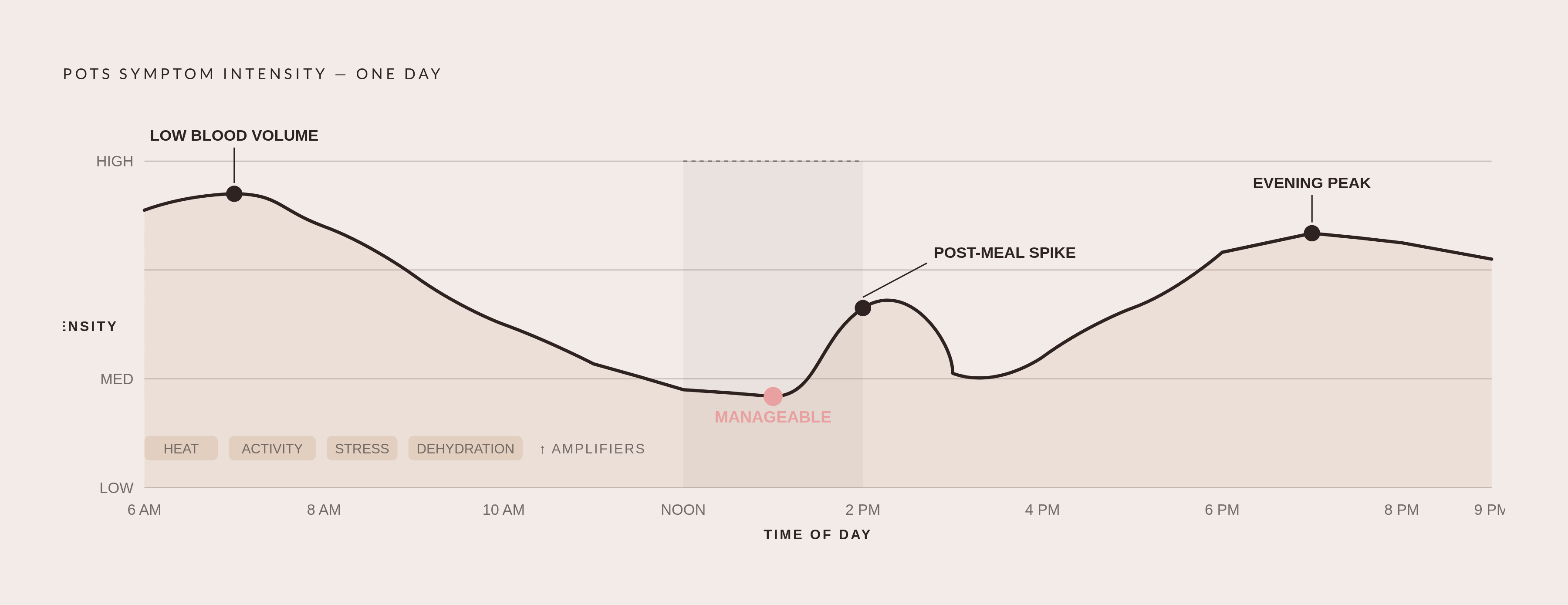
Posture is the main switch. Symptoms usually worsen within minutes of standing and ease on returning to lying down, though not instantly, which throws off the timing for both patients and the doctors trying to make sense of it. Activity makes things worse. Because the nervous system can't scale up to meet demand, even moderate exertion, a short walk, a flight of stairs, can trigger a crash that's wildly out of proportion to the effort spent.
Heat gets underestimated constantly. Warm temperatures widen blood vessels, which makes the pooling worse. A hot shower, a summer afternoon, even a bowl of hot soup can bring on symptoms that feel identical to a standing-triggered episode. That trips up patients who assume posture is the only thing worth tracking. It isn't, and treating heat as an afterthought is a real gap in how most people manage this.
Time of day matters too. Mornings run rough, since blood volume sits lower after a night spent lying flat. Symptoms often spike after meals, since digestion pulls blood away from the rest of the body. Some patients describe a better-functioning window in the middle of the day, a stretch where things feel manageable before symptoms build again toward evening.
None of this stays fixed over time, either. Course varies widely: patients report getting worse, getting better, or staying about the same from onset, and that variation means a single clinic visit tells a doctor very little. Stress, poor sleep, dehydration, menstrual cycle timing, and medication changes all shift symptom intensity, and patients usually notice these connections through trial and error long before anyone explains the biology behind them.
A symptom logged alone, with no context attached, is just a data point. The same symptom logged with position, activity, time of day, and what else was going on turns into a pattern. And a pattern is what moves a conversation with a doctor forward instead of stalling it in guesswork.
The comorbidity cluster that frequently accompanies post-COVID POTS
Post-COVID POTS rarely travels alone. Chronic migraine, irritable bowel syndrome, and Raynaud's phenomenon show up again and again in the same patients, often diagnosed before POTS ever enters the picture. Fibromyalgia and inflammatory bowel conditions turn up repeatedly in the same patient populations, a pattern that has prompted researchers to look for shared mechanisms.
These are largely conditions where the nervous system already runs sensitized, or "hyperexcitable," before COVID enters the picture. That's the reason they cluster together instead of showing up as unrelated bad luck. Dysautonomia also shows up alongside joint hypermobility (Ehlers-Danlos syndrome) and mast cell activation, a clustering pattern that has drawn clinical attention even though nobody has fully worked out why it occurs.
Tracking heart rate and dizziness alone misses most of the story. Gut symptoms, headache patterns, fatigue, and heat sensitivity belong on the same chart, because they're threads of one underlying picture, not separate complaints filed under separate specialists. That tangle, spread across doctors who rarely compare notes, is a recognized reason POTS diagnoses can get delayed or missed.
Why post-COVID POTS is not the same for everyone: mechanisms behind the variation
No single pathway explains post-COVID POTS. That's exactly why treatment response varies so much from one patient to the next, and why nobody should expect a single drug or protocol to work across the board. Researchers are chasing several mechanisms at once, and different patients are likely dealing with genuinely different root problems, not variations on one theme.
One well-documented pathway involves autoimmune attacks on the autonomic nerves themselves. COVID appears to trigger an immune response that, in some patients, mistakenly targets the nerve fibers that regulate blood vessels and heart rate. Tied to that, researchers have been investigating autoantibodies that may target autonomic receptors and amplify sympathetic nervous system activity, driving the tachycardia seen in POTS — an idea now feeding emerging immunotherapy trials.
Small fiber neuropathy is another mechanism under study: damage to small nerve fibers means blood vessel walls never get the signal to constrict when a patient stands. Some researchers are chasing persistent viral reservoirs too, the idea that viral material lingers in the body and keeps stirring up immune trouble long after the initial infection clears. A 2025 University of Toledo case-control study with 252 participants found a statistically significant link to platelet delta-storage pool deficiency, a clotting abnormality now linked to POTS in this patient group.
The same complaint, palpitations on standing, say, can come from entirely different root causes in two different patients. That's why blanket self-treatment falls flat, and why the full symptom pattern matters more to a clinician than any single complaint reported alone. On the research front, the NIH's RECOVER-AUTONOMIC trial is testing IVIg and ivabradine against placebo. Ivabradine arm results came out in March 2026; IVIg results are expected by late 2026. It's the largest effort so far testing whether hitting the immune pathway directly actually changes outcomes.
The specific burden post-COVID POTS places on daily life and mental health
The Yale LISTEN cohort compared POTS patients to long COVID patients without POTS, and the gap is stark. Patients with POTS skewed younger, and reported more financial strain, more social isolation, more suicidal thoughts, and worse overall health status on the EuroQoL visual analog scale. Most of the POTS group were women, a demographic that frequently encounters skepticism when symptoms are autonomic or pain-based and don't show up cleanly on a standard test.
Unpredictability becomes its own burden. Patients often can't tell in advance which activities will trigger a crash, which makes planning a workday, a social event, or a grocery run genuinely hard to hold together. Fatigue severity in documented groups runs high enough to compound every other symptom on the list, not sit alongside them as a separate complaint.
Because symptoms span so many body systems (palpitations, brain fog, gut trouble, headaches) without one obvious test to point to, patients run into skepticism from providers constantly. A 2025 commentary in JACC: Advances raises the issue of medical gaslighting in this patient population. Social isolation follows from there: when standing for long periods, showing up to events, or holding down steady employment becomes unreliable, relationships erode. The Yale LISTEN numbers back that up with data, not just anecdote.
That's exactly why documentation changes how patients talk to their care teams. Walking into an appointment with a written record of patterns, instead of a list of complaints pulled from memory under pressure, changes the conversation and cuts the odds of getting waved off.
Why energy management is a medical necessity, not a lifestyle adjustment
Post-exertional malaise in POTS is a real physiological event, not a discipline problem, and treating it like one is exactly backwards. It has nothing to do with willpower, whatever a well-meaning friend might imply. Because the nervous system can't scale up to meet activity demand, pushing hard on a good day can trigger flares that last days or weeks afterward. Rest isn't optional downtime here. It's management of an actual physical limit, the same way insulin dosing manages a physical limit for a diabetic. Nobody calls that a lifestyle choice.
Spoon theory, a concept Christine Miserandino introduced in 2008, gives patients and clinicians shared language for this. Each person starts the day with a limited number of spoons, and every activity, showering, cooking, a work call, costs a set number. Once they're spent, they're spent for the day. No amount of willpower buys back a spoon.
Activity pacing is the clinical version of that idea: balancing activity and rest on purpose to head off or cut down on dizziness, extreme fatigue, brain fog, and fainting. It isn't about resting constantly. It's calibrated activity, matched to what the body can handle that specific day, and that ceiling shifts constantly given how much POTS symptoms swing around.
Exercise cuts both ways here, and it's worth sitting with why. It's a widely recommended non-drug component of POTS management, but it has to get introduced carefully. Upright exercise, running, standing workouts, tends to backfire early on. That's why treatment almost always starts recumbent or horizontal instead, a stationary bike laid flat, a rowing machine, something that gets the heart working without asking the blood vessels in the legs to fight gravity while they're still failing at the one job that matters. The pacing challenge never fully goes away, either: what a patient handles on Monday may be nothing like what their body allows on Thursday. That moving target is exactly why energy management has to stay an ongoing part of medical care, not a one-time lifestyle tweak someone picks up once and then shelves.
Sources
- Characterization of Postural Orthostatic Tachycardia Syndrome in Long COVID: Self-reported Data From the LISTEN Study - ScienceDirect
- Frontiers | Post-COVID postural orthostatic tachycardia syndrome (POTS): a new phenomenon
- Postural orthostatic tachycardia syndrome in post-COVID-19 long-hauler patients is associated with platelet storage pool deficiency
- Stirring the POTS: Finding Symptom Patterns in Long COVID | JACC: Advances
- cmsa.org
- cdn.clinicaltrials.gov