POTS vs Orthostatic Hypotension Differences
One is a blood pressure problem, the other a heart rate one.
POTS and orthostatic hypotension both hit the moment someone stands up, and both take too long to diagnose. Here's where the similarity ends: one is a blood pressure problem, the other is a heart rate problem, and confusing them sends patients toward the wrong tracking, the wrong tests, and years of appointments that go nowhere. Many people treat these as two flavors of "the dizzy thing," which overlooks a distinction that matters more than any other piece of information in this article.
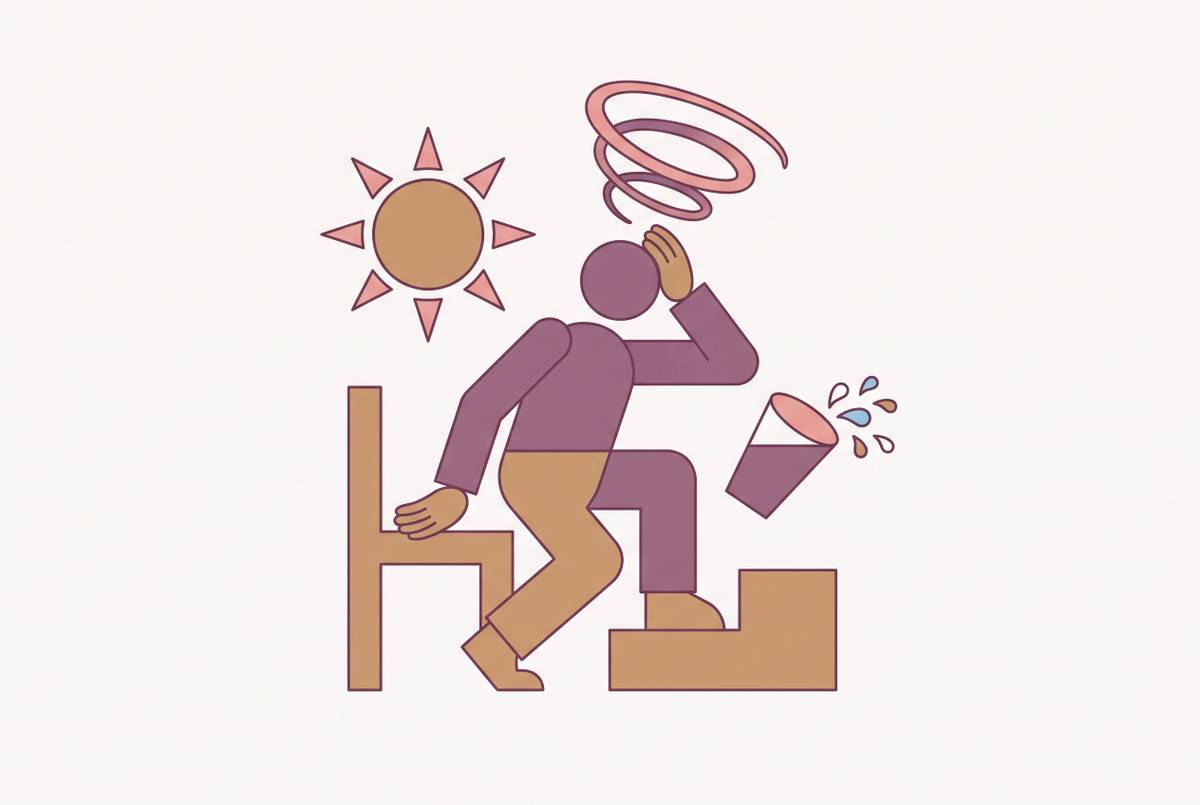
Both conditions fall under orthostatic intolerance, a term that just means the body fails to adjust when someone moves from sitting to standing. The opening seconds feel identical: dizziness, a swimmy head, the sense that the room tilts. Heat makes both worse, dehydration makes both worse, and neither is rare, no matter how often patients get told to drink more water and stop worrying about it. Sorting the physiological split between them is the most useful thing a patient can do, because it decides which numbers matter and what a doctor can actually act on.
The single diagnostic split: blood pressure versus heart rate
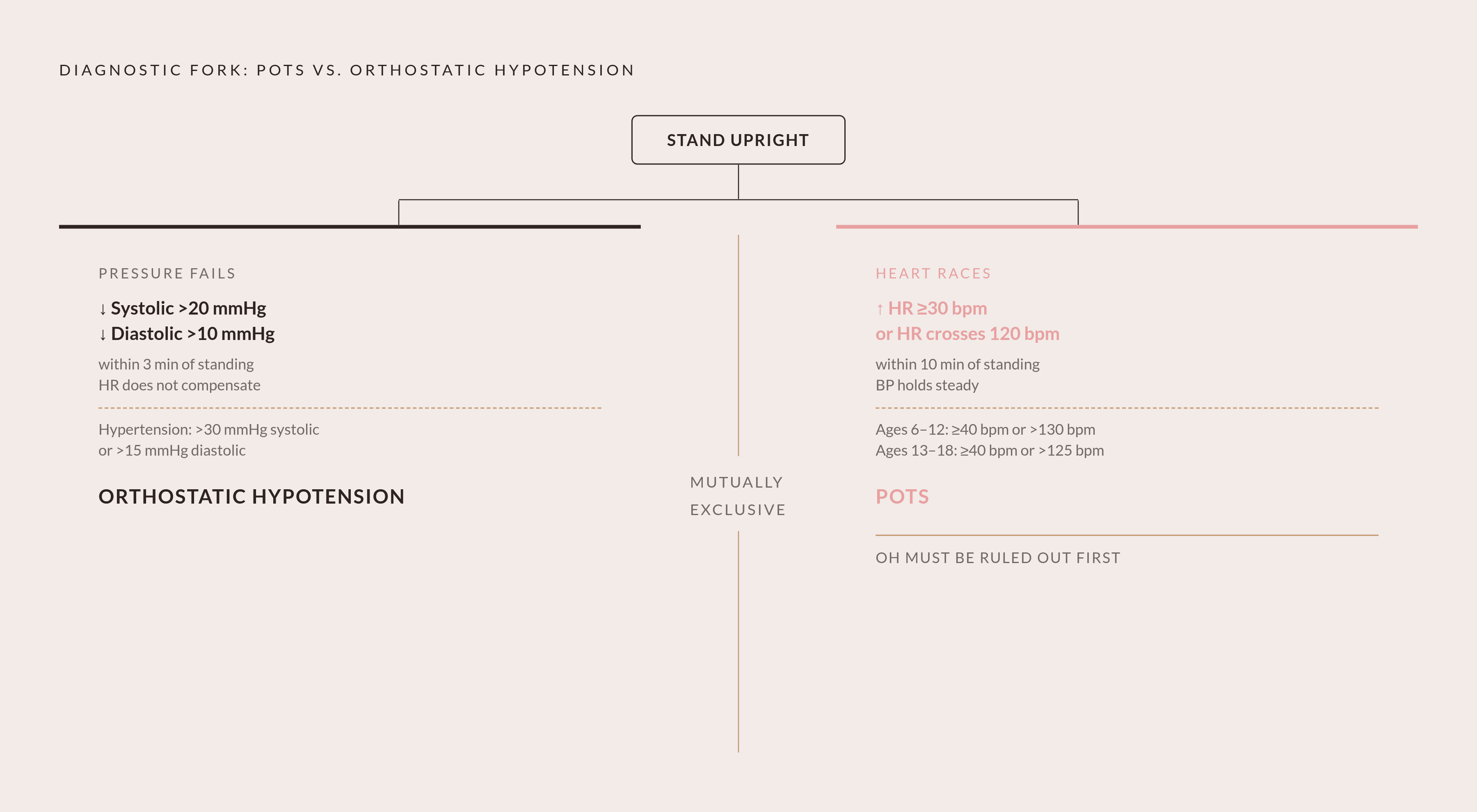
Orthostatic hypotension means blood pressure drops on standing: more than 20 mmHg systolic, or more than 10 mmHg diastolic, measured within three minutes of getting up. The heart doesn't step in to correct it, and that missing compensation is the diagnosis.
POTS runs the opposite direction. Blood pressure holds steady, but heart rate spikes, either a sustained rise of 30 beats per minute or more, or a rate that crosses 120 bpm, within ten minutes of standing. POTS can only get diagnosed once OH has been ruled out, a sequencing detail that trips up many patients and clinicians alike. These aren't two points on one spectrum, since they're mutually exclusive by definition, and treating them as interchangeable is exactly how patients end up mismanaged for years.
A couple of wrinkles matter. Patients with existing hypertension get a shifted OH threshold, since their baseline runs higher: the drop has to exceed 30 mmHg systolic or 15 mmHg diastolic before it counts. Kids get their own POTS criteria too, with a rise of at least 40 bpm, or a rate above 130 bpm for ages 6 to 12 and 125 bpm for ages 13 to 18. Pediatric cases often show up right after a growth spurt or a virus, exactly when parents and doctors are most likely to shrug it off as growing pains.
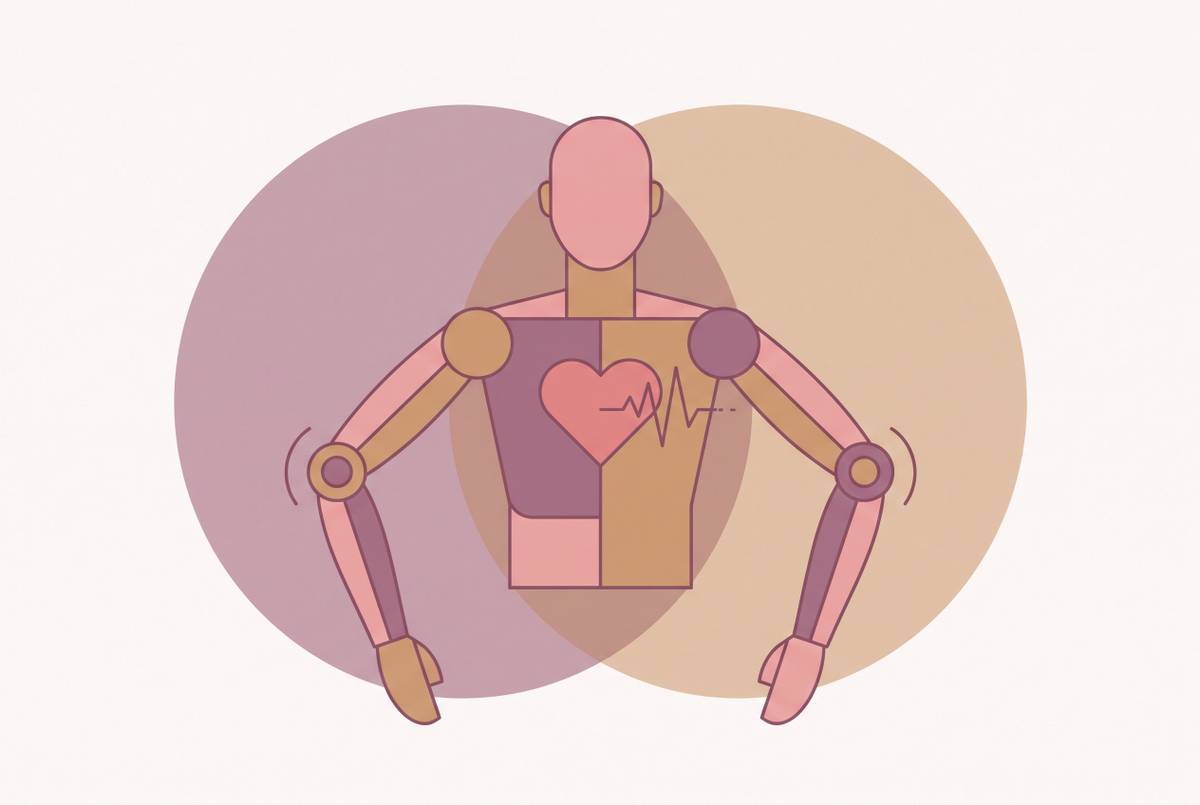
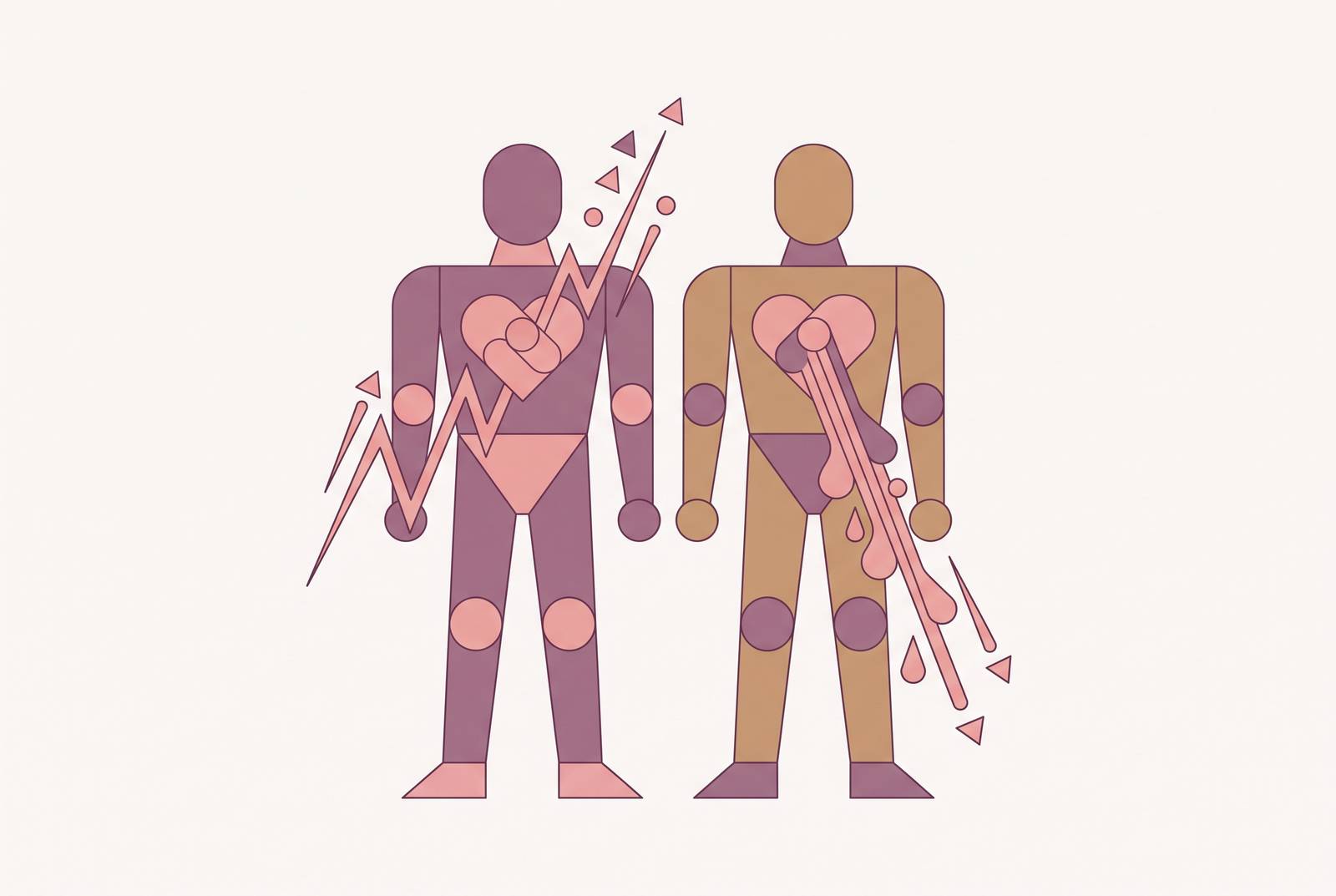
Hold onto this one line: in OH, the pressure fails and never catches up. Meanwhile in POTS, the pressure holds, but the heart has to race to keep it there.
What each condition actually feels like day to day
Dizziness, near-fainting, fatigue: the overlap explains most of the confusion, but look past the shared symptoms, and the two profiles pull apart fast.
OH hits within seconds of standing and eases once the patient lies back down. One symptom gets less attention than it deserves: coat hanger syndrome, an ache across the neck and shoulders from reduced blood flow to the trapezius. It's distinctive, underreported, and most patients never connect it to their blood pressure at all. Add visual disturbances, chest tightness, brief confusion, and in severe cases, actual falls or fainting. Neurogenic OH pushes this further: even brief standing becomes difficult, so patients learn to dodge heat, big meals, and exertion, since all three drag the pressure down further.
POTS looks different from the jump, with palpitations and a pounding heartbeat sitting front and center, a different lived experience than the faintness-first pattern of OH. Brain fog, trouble concentrating, nausea, headache, blurred vision, tremor, and exercise intolerance round out the picture. Dependent acrocyanosis, a dark red-blue discoloration running from the feet up past the knees, shows up often enough in POTS patients that plenty of them notice the color for years before anyone tells them it's connected. GI symptoms play a bigger role here than most people assume, and there's a time-of-day pattern too: orthostatic tachycardia runs higher in the morning, so patients who feel worst right after getting out of bed aren't imagining it. Testing done in the morning tends to catch more for exactly this reason.
A pounding, racing heart points toward POTS, while a sudden collapse in blood pressure that resolves fast once someone lies down points toward OH. Symptoms alone won't confirm either one, but they tell you which direction to look.
Who gets each condition and why the populations look so different
POTS is a young person's condition, and overwhelmingly a woman's. The female-to-male ratio runs close to 9:1, with onset most common during the reproductive years. Triggers cluster around viral infection, hormonal shifts like menarche, pregnancy, or perimenopause, and growth spurts, which is exactly why so many early cases get waved off as "just hormones."
COVID-19 changed the scale of this problem. A 2026 systematic review and meta-analysis found a pooled prevalence of 36.2% for POTS and 18.6% for OH among people dealing with post-acute COVID-19 sequelae, and both conditions now rank among the major complications of Long COVID.
OH tells a different demographic story, one tied to aging more than to hormones or viruses. The Cardiovascular Health Study found prevalence climbing from 14.8% in adults aged 65 to 69 up to 26% in those 85 and older. In nursing homes, prevalence reaches 50%; in geriatric wards, it hits 68%, making OH one of the leading drivers of falls and hospitalization in institutional care. In an older patient, the blood pressure reading often signals something bigger going on in the nervous system, and that's the piece most primary care visits miss.
Why POTS takes nearly six years to diagnose on average
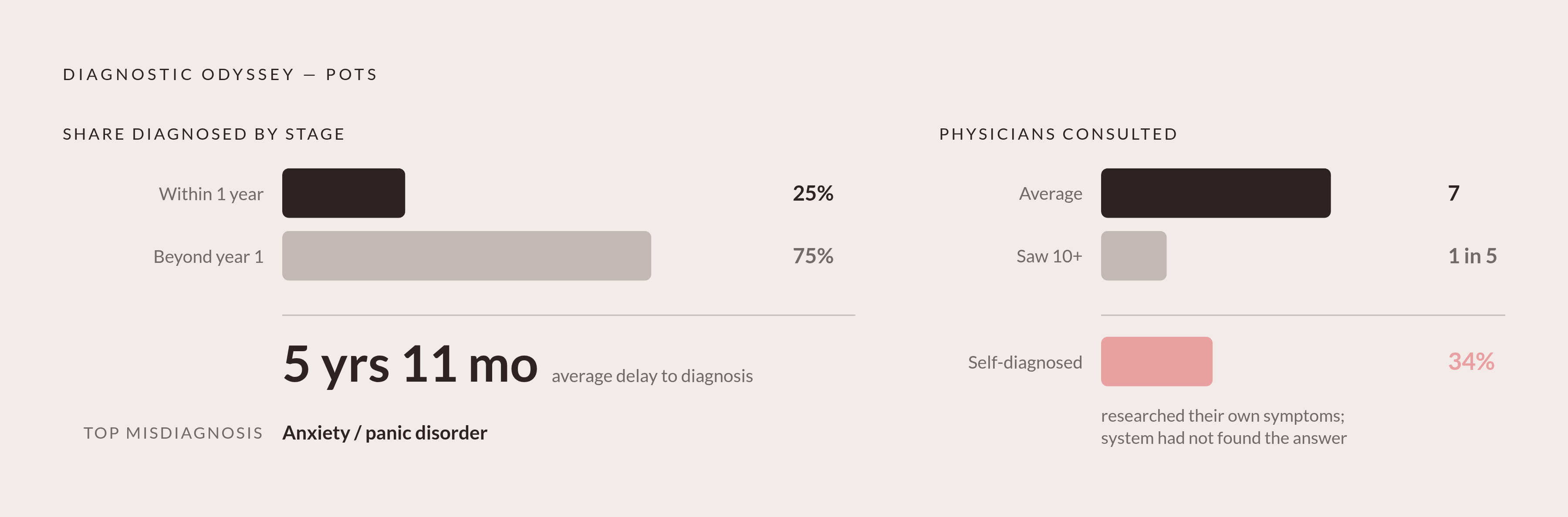
The average diagnostic delay for POTS runs 5 years and 11 months, and only 25% of patients get diagnosed within the first year of symptoms, according to Dysautonomia International. Along the way, patients see an average of 7 different physicians, and roughly 1 in 5 consult more than 10 doctors before anyone lands on the right answer, according to data compiled by cognitivefxusa.com.
Here's the detail that stings most: 34% of patients eventually figured out the diagnosis themselves, after researching their own symptoms and bringing it to a doctor, according to cognitivefxusa.com. A third of a patient population did the diagnostic legwork the medical system failed to do for them.
The most common misdiagnosis is almost cruel in its irony. A widely reported pattern in POTS diagnosis is that a large share of patients were first told they had anxiety or panic disorder. The racing heart that defines POTS, the exact symptom that should point a clinician toward autonomic dysfunction, gets read instead as a psychological symptom. Anxiety is a plausible read on a fast pulse in an exam room, yet it's the wrong read here, and any clinician still defaulting to it is looking at the wrong system.
OH doesn't carry the same volume of delay data, but the pattern shows up anyway. Older adults get told their symptoms are just "normal aging," or the drop in pressure gets pinned on a medication with no real follow-up. Either way, the cost is real: rising fall risk for OH patients, progressive deconditioning for POTS patients, years spent not being believed.
The emotional weight of years without answers
Being told a physical symptom is psychological doesn't just delay treatment. It manufactures real anxiety on top of a condition that was never managed to begin with, and that compounding trap catches POTS patients again and again.
Studies of pediatric POTS patients have found high rates of anxiety, depression, or both among those who went years without a correct diagnosis. That number sounds damning until the causality gets sorted properly. Over half of POTS patients report being told, by at least one clinician, that their symptoms were "all in their head," and years spent unmanaged and disbelieved are the likelier driver of that anxiety, not some separate psychiatric problem riding alongside it. Conflating the two is exactly the mistake that stretches diagnosis out past five years in the first place.
OH patients carry a different weight, particularly older adults: fear of falling, social withdrawal, a slow erosion of independence, since every time someone stands up there's a real physical risk attached to it. Different condition, different age group, same underlying wound: an illness with no visible marker is dramatic on the inside and invisible from the outside, which is what makes it so easy for anyone else to dismiss.
One thing cuts against the isolation. The POTS and dysautonomia community has grown substantially since the pandemic, and connecting with people navigating the same condition gives patients a real buffer against years of feeling unheard.
How the physiological difference shapes what's worth tracking
The blood pressure versus heart rate split isn't diagnostic trivia. It tells a patient exactly what to measure, and getting that wrong wastes months of tracking the wrong number.
For POTS, heart rate on standing is the number that matters most. A wearable, or even a manual pulse check taken right after standing, carries real information. Morning matters too, since the tachycardia spike runs measurably higher first thing in the day; comparing morning heart rate against evening heart rate captures an actual physiological pattern instead of noise. Beyond that, tracking meals, heat, activity, hormonal cycle, and hydration against symptoms shows which triggers actually move the needle for a given person. GI symptoms, brain fog, and leg discoloration belong in that log too, since they're part of the clinical picture, not side complaints.
For OH, blood pressure on standing is the number, measured within three minutes of getting up rather than at rest. Timing matters just as much: how many seconds before symptoms hit, how long they last, how fast they clear once the patient lies back down. Meals are worth tracking too, since eating can interact with blood pressure in ways that worsen symptoms. So are hot environments, medication timing, and falls or near-falls, logged with real specificity, since that's the outcome most likely to move a clinician toward treatment.
Both conditions benefit from tying symptom logs to context: sleep the night before, activity, hydration, stress. A single blood pressure or heart rate reading, floating with no context, doesn't say much on its own, but recorded consistently, at the same time of day, that same number turns into a pattern, and a pattern is what a doctor can act on.
Arriving at appointments with the right evidence for each condition
The diagnostic split that opens this piece is also the sharpest tool a patient has walking into an appointment. Saying "my heart rate spikes when I stand, but my blood pressure doesn't move" hands a clinician the one sentence that narrows the diagnosis fastest.
For suspected POTS: bring heart rate readings taken lying down, then again within ten minutes of standing, ideally in the morning, across multiple days. Bring a symptom log covering palpitations, brain fog, GI symptoms, and fatigue, tied to activity and hydration at the time, and note how fast symptoms clear on sitting or lying back down. Since most POTS diagnoses flow through cardiology, naming POTS or dysautonomia directly and asking for a tilt table test or an active stand test can cut real time off the process.
For suspected OH: bring blood pressure readings taken lying or sitting, then again within three minutes of standing, with timestamps attached, along with a log of falls or near-falls, noted with timing and context. Bring the full medication list, since antihypertensives, diuretics, and antidepressants can all contribute to OH, and a doctor needs the complete picture to spot it. Document coat hanger pain, visual disturbances, and worsening after meals as real symptoms worth noting.
For patients who've already waited years, framing the conversation around objective measurements instead of symptom descriptions changes the entire dynamic. It hands a skeptical clinician something concrete to respond to, instead of something easy to wave off.
Knowing which number matters, heart rate or blood pressure, is the single most useful thing this distinction offers. It decides what to measure, what to log, and what to say the moment someone finally gives a patient five minutes to explain what's actually happening.