POTS Misdiagnosis as Anxiety or Panic Disorder
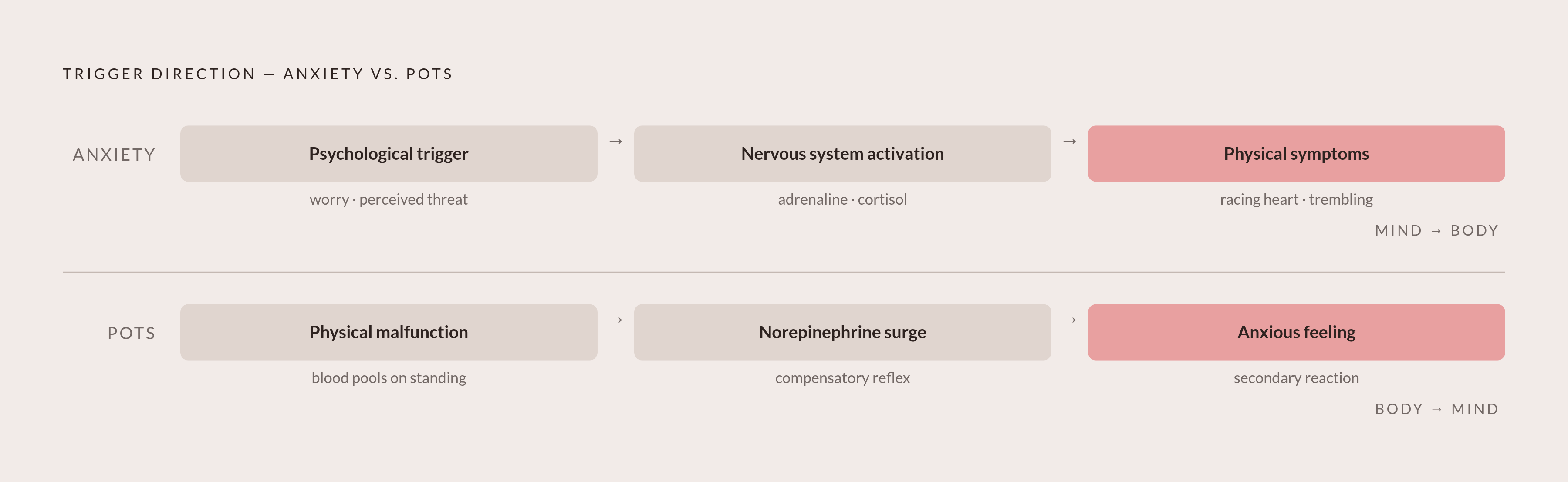
Gravity triggers the physical surge that mimics panic, not psychological fear.
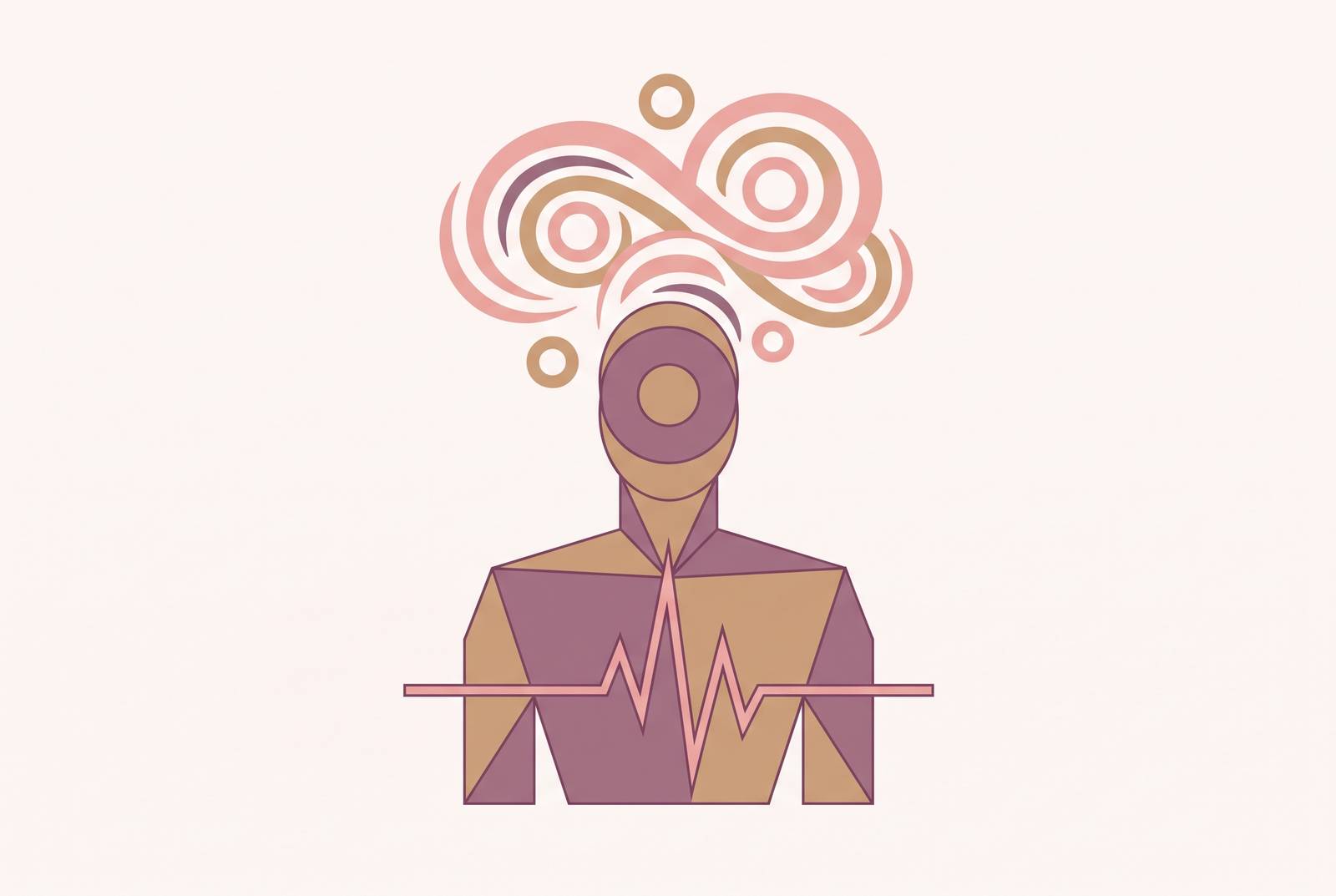
POTS gets mistaken for anxiety because the two conditions share a biochemical event, not just a few overlapping symptoms. Postural orthostatic tachycardia syndrome is defined by a heart rate rise of 30 beats per minute or more within minutes of standing, without the drop in blood pressure that would signal orthostatic hypotension. Standing upright lets blood pool in the legs and lower body, so the nervous system floods the bloodstream with norepinephrine to try to compensate. That surge is the same one the body reaches for during fear or panic, and it produces the same list: racing heart, shortness of breath, trembling, sweating, chest tightness, trouble concentrating.
In the hyperadrenergic subtype of POTS, a faulty norepinephrine reuptake transporter lets excess norepinephrine spill into circulation, and the resulting state looks, from across an exam room, just like a panic disorder episode. Standing has been shown to push norepinephrine in these patients up to levels seen during the body's active stress response. The fight-or-flight state is measurable. Gravity triggers it, not fear.
That distinction about triggers points to something clinicians and patients both need to hold onto: the order events happen in runs backward between the two conditions. Anxiety starts with a psychological experience, a worry or a threat, and the body follows with physical symptoms. POTS begins with a physical malfunction in blood flow regulation, and any anxious feeling that follows it is a reaction to a body that's misbehaving, not the cause of it. Same symptoms, opposite sequence.
Three structural reasons clinicians keep making the same mistake
Individual carelessness isn't what's driving years of misdiagnosis. Three conditions built into how medicine trains, schedules, and evaluates patients push toward a psychiatric label almost by default.
When a young patient shows up with a racing heart and standard cardiac workups come back normal, there's no strong alternative pattern in the clinician's training to reach for. Anxiety, by contrast, is a diagnosis every clinician has seen hundreds of times and knows how to name quickly.
Clinic visits compress the problem further. A ten or fifteen-minute appointment rarely leaves room for a detailed positional history, the kind of questioning that would identify "my heart only races when I stand up" as a distinct pattern rather than a vague complaint. A symptom set that looks psychiatric, tests that come back normal, and a visit too short to dig into position and timing combine, and the most familiar explanation wins by default.
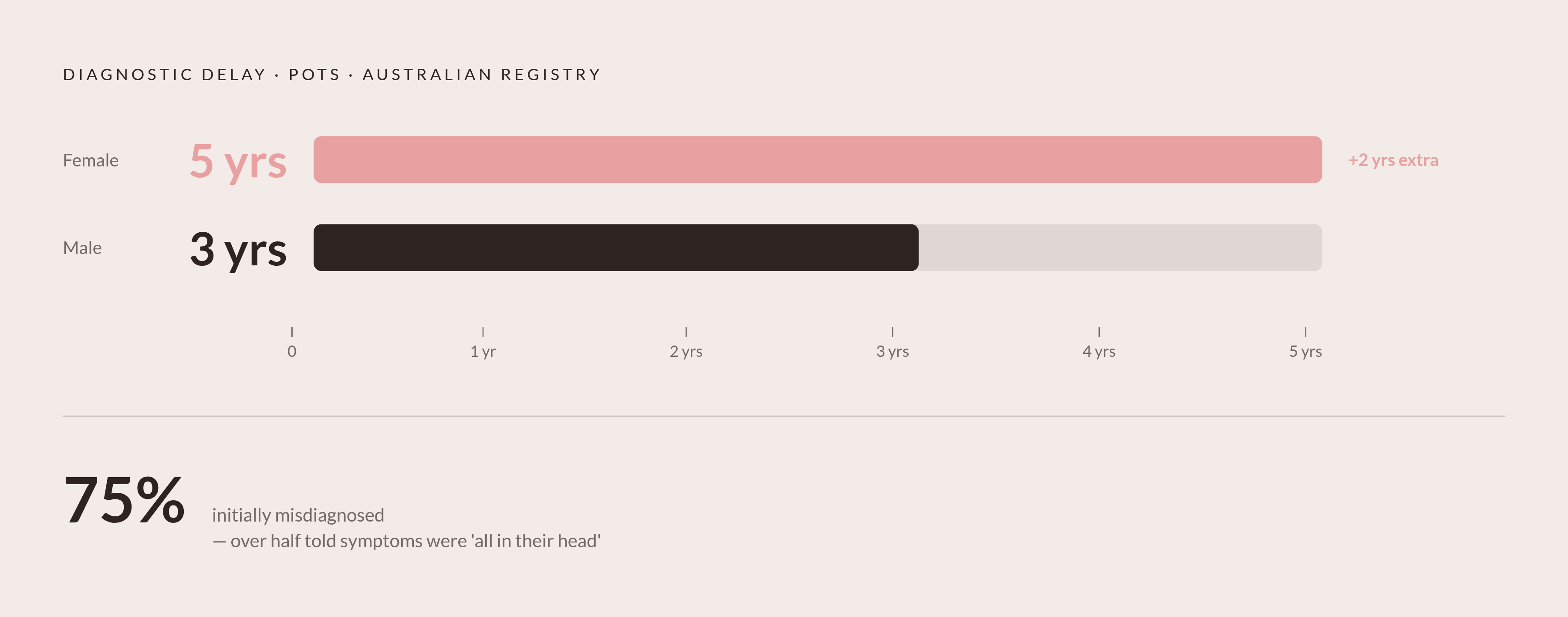
Gender bias is the third factor, and it's the one with the clearest paper trail. The majority of POTS patients are women between 15 and 50, and research on diagnostic bias consistently finds that women's physical symptoms get attributed to anxiety or stress more often than men's. Australian registry data puts a number on that disparity: women wait more than three years longer than men for a correct diagnosis. Female patients average roughly five years to diagnosis and male patients roughly three years, a gap that cannot be explained by symptom severity alone.
None of these three factors work in isolation. A condition missing from training gets assessed in a rushed appointment, and the population it disproportionately affects is the same population whose physical complaints get filed under stress. The system produces misdiagnosis on its own structure, without needing a single clinician to act in bad faith.
The scale of misdiagnosis and its cost to patients
Misdiagnosis is the common outcome for POTS, not a rare failure mode. It's what happens to most patients, and the cost compounds for every year the wrong diagnosis stands.
A large cross-sectional survey found that around 75% of POTS patients were initially misdiagnosed with something else entirely, and a more recent 2024 survey in the Journal of the American Heart Association found that a large share of those patients were told specifically that they had anxiety or panic disorder. More than half of POTS patients say at least one doctor told them their symptoms were "all in their head" before they got the correct diagnosis. The average diagnostic journey runs close to five years and involves multiple doctors, with a meaningful minority seeing ten or more physicians before anyone connects the pattern.
The real damage is what happens during the wait, not the wait itself. A wrong diagnosis leads to wrong treatment, and anti-anxiety medications, particularly benzodiazepines, can make POTS symptoms worse or mask them entirely, pushing autonomic care even further out of reach. Years pass with patients managed for a condition they don't have while the actual one goes untreated.
The Australian registry tracks what that costs in daily life: reduced social engagement, high unemployment, a reduced ability to do ordinary daily activities, and low quality of life overall, concentrated in a population that skews young. These are patients in their teens, twenties, and thirties losing years of work, school, and relationships to a condition that had a test available the entire time.
What distinguishes POTS symptoms from anxiety symptoms
The overlap between POTS and anxiety lies in when and in what position the symptoms occur, not in which symptoms occur, and standard anxiety screening tools were never built to catch that distinction.
POTS symptoms track posture closely. They appear or get sharply worse when a patient sits up, stands, or showers, and they tend to ease when lying back down. Anxiety symptoms don't follow that pattern in any reliable way. In POTS, the racing heart and shortness of breath come from the body's blood flow regulation misfiring. In anxiety, they come from a response to a perceived threat or stressor. A patient whose heart pounds and whose breath goes short the moment they stand up in the shower, but who feels calm lying in bed a few minutes later, is describing a physiological trigger tied to gravity, not a psychological one.
A handful of other signals help separate the two. Symptoms that ease with lying down point toward POTS, since the mechanism is blood pooling in the lower body when upright, which resolves once the patient lies back down. Brain fog and cognitive trouble that seem out of proportion to how anxious a patient actually feels point the same direction. Extreme fatigue that gets worse with upright activity and doesn't respond to rest the way ordinary tiredness does is another marker. A case series from Queen's Hospital Burton found POTS patients frequently also had hypermobility spectrum disorders, notably Ehlers-Danlos Syndrome, along with fibromyalgia and autoimmune conditions.
Anxiety and POTS can genuinely co-occur, and living with an uncontrolled autonomic condition that makes your heart race and your body fail you is itself anxiety-provoking, producing emotional distress that is not fabricated. The distinction that matters for treatment is which one came first. A 2024 study at Nemours Children's Hospital found that only a small share of POTS patients had a standalone anxiety disorder, while 74% showed moderate to severe anxiety, depression, or both. That cuts both ways clinically: treating the anxiety as the primary problem delays the autonomic workup a patient actually needs, but writing off genuine psychological distress as purely secondary can deny a patient mental health support that would actually help them. Sequence is the whole question, and symptom presence alone won't answer it.
How POTS is diagnosed
POTS has a test that settles the question directly, and it almost never gets used, because a clinician has to consider POTS as a possibility before they'll think to order it.
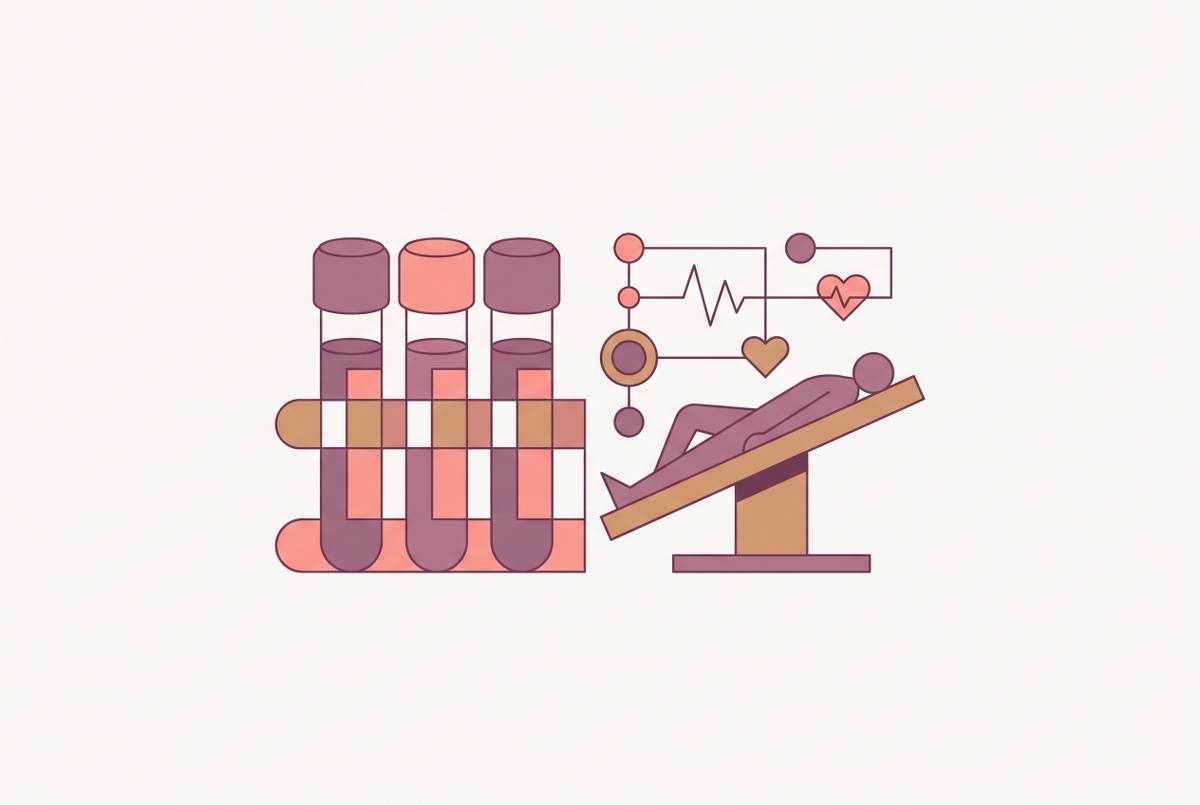
The gold standard is a tilt table test, which tracks heart rate and blood pressure as a patient moves from lying flat to upright. A simpler bedside version, the active stand test, needs nothing more than a heart rate monitor, a blood pressure cuff, and a few minutes of rest before standing. POTS is confirmed by a substantial, measurable jump in heart rate on standing, without the blood pressure drop that would indicate orthostatic hypotension instead, and none of that requires specialist equipment for an initial screen.
The failure happens a step earlier. Once a clinician has settled on "anxiety," the active stand test never gets ordered, and the loop closes before anyone opens it. A 2025 qualitative study by Walsh and colleagues in Health Psychology captured this from patients directly: participants described discovering the diagnosis on their own and asking, unprompted, to be evaluated for POTS. One patient waited 35 years for a diagnosis, and got it only because they knew enough to ask their doctor to recheck their heart rate while standing. As the patient put it, "he never would've thought of doing that himself". Roughly 36% of POTS patients report having to suggest the diagnosis themselves, and the job of catching a missed diagnosis lands on the person least equipped to catch it.
Access makes the gap wider. Only a small share of POTS patients in large surveys have ever been seen at an Autonomic Disorders Consortium specialty center, and insurance restrictions along with limited referral pathways keep most patients from reaching a specialist at all. Long COVID has raised the stakes on all of this. Since the pandemic, researchers have tracked a real jump in new POTS diagnoses, with a meaningful share of highly symptomatic Long COVID patients meeting the diagnostic criteria for POTS outright. That's a larger population than before who need this simple bedside test considered, at the exact moment referral bottlenecks are already stretched thin. What patients can do in the meantime, while that system catches up, starts with the data they can generate on their own.
Wearables and Structured Tracking for Appointments
Continuous heart rate data tied to posture and time of day gives a patient something a verbal symptom description can't: an objective record that's hard to wave off as anxiety. Wearable devices track physiological metrics like heart rate continuously and in real time, and a study in Open Forum Infectious Diseases by Uwakwe and colleagues found that this kind of non-invasive, wearable-derived data can objectively back up a clinical history, with potential to reshape how conditions like POTS and Long COVID get diagnosed.
A smartwatch or fitness tracker captures something a single clinic visit never can: heart rate the exact moment a patient stands up, how that rate moves over the following minutes, and the pattern repeated across dozens of those transitions over days or weeks. One office visit gives a doctor a single data point.
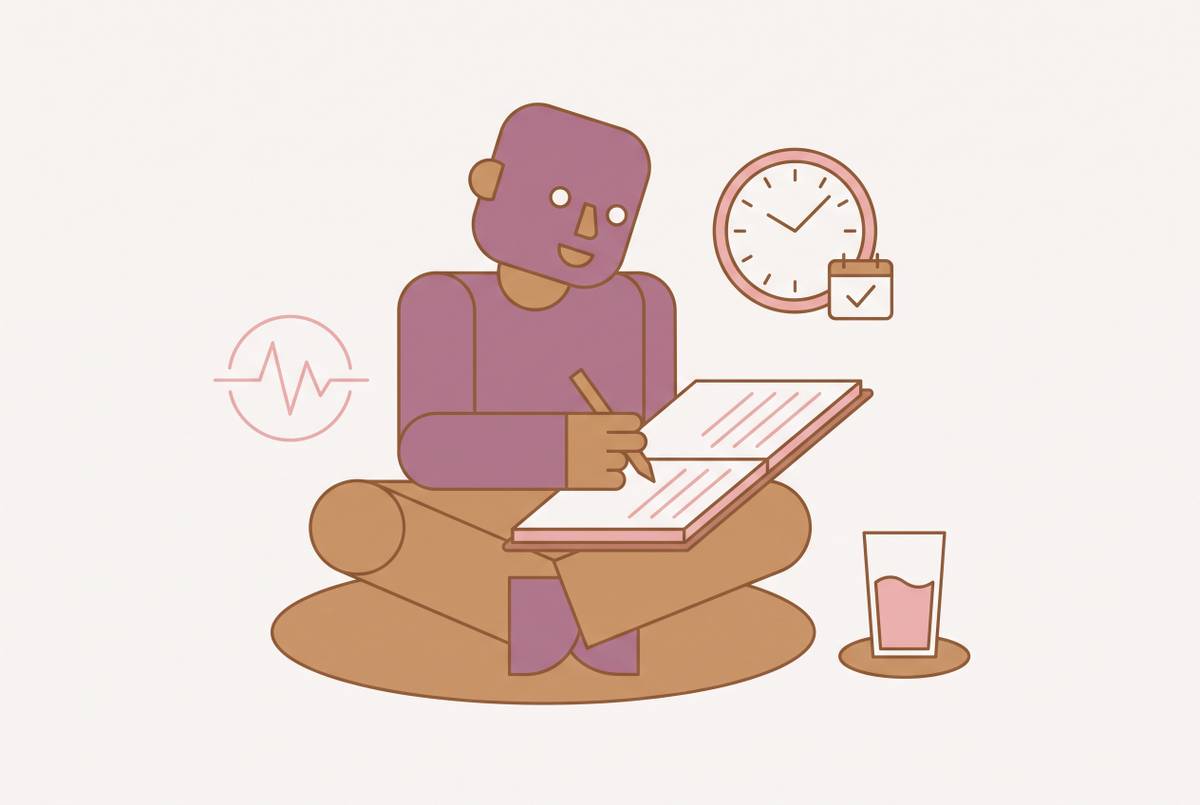
Some tools are built for this population specifically. Visible, designed for energy-limiting conditions including POTS, ME/CFS, and Long COVID rather than general fitness, measures heart rate variability and resting heart rate each morning to generate a daily stability score, and its paid tier adds PacePoints, an all-day energy budget that alerts a user in real time when they're crossing into overexertion. A basic symptom journal does similar work with less technology, recording positional triggers, heart rate readings, and timing by hand or through an app. That turns a vague complaint like "I feel anxious and my heart races" into a documented pattern: heart rate spikes on standing, eases when lying down, and repeats several times a day regardless of how stressed the patient actually feels.
None of this replaces the tilt table test or the active stand test. These tools support the conversation and help a clinician decide to order the right test sooner, and patients should read the privacy terms carefully before handing sensitive health data to any app or wearable service.
Managing energy when standing itself is the trigger
Standing costs a POTS patient more, physiologically, than it costs someone with a functioning autonomic nervous system, making pacing a physiological requirement rather than a lifestyle preference. It's a physiological requirement.
Every moment spent upright, when standing triggers that compensatory norepinephrine surge, is a moment the cardiovascular system is doing extra work it wouldn't otherwise need to do. A shower, a stretch of cooking at the stove, or standing in line at the pharmacy triggers the same norepinephrine surge the body uses during fear or panic, which can leave a POTS patient as drained as a hard workout would leave someone without the condition. The body is compensating for blood pooling in the legs, over and over, for as long as the patient stays upright.
Treating that as a medical fact rather than a mood or a motivation problem changes how energy gets planned. Sitting through tasks that don't require standing, spacing upright activities across a day instead of stacking them, and tracking how long a stretch of standing a patient can tolerate before symptoms spike all follow directly from the mechanism itself, not from general wellness advice. The same wearable and journaling tools that help build a case for diagnosis show a patient how much upright time triggers a symptom flare, days before that patient would otherwise notice it happening.