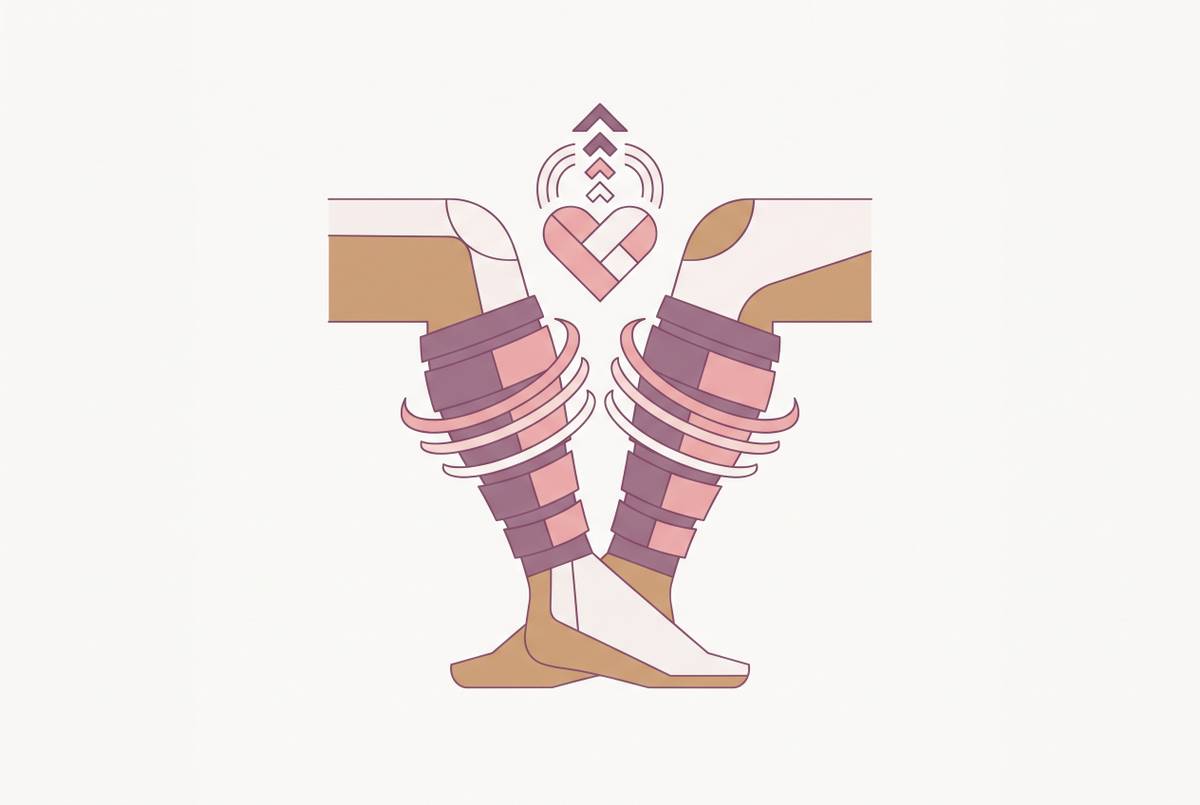
Heat Intolerance and POTS Summer Strategies
How a misfiring nervous system turns summer heat into a medical crisis.

Heat intolerance in postural orthostatic tachycardia syndrome, or POTS, is not random bad luck or a weak constitution. It follows a specific physiological chain, one that makes an ordinary hot afternoon genuinely risky for a nervous system that's already working overtime to keep blood moving where it needs to go.
Why heat hits POTS patients differently from everyone else
Anyone who has lived through a summer with POTS knows the pattern: the air gets thick, the body starts fighting itself, and a walk to the mailbox turns into an event. That pattern has a cause, and the cause starts with something the body does automatically, in everyone, all the time.
When a healthy person gets hot, the autonomic nervous system widens the blood vessels near the skin's surface. That lets heat escape, and for most people, the cardiovascular system just absorbs the change. The heart pumps harder, blood pressure stays steady, and you just feel warm.
In POTS, that same vessel widening turns into a problem. Blood that should be circulating to the heart and brain pools instead in the legs, and standing becomes harder because there's simply less blood making the trip back up. Sweat makes the situation worse. Even mild fluid loss from perspiration shrinks blood volume further, and in POTS, a smaller circulating volume translates directly into worse dizziness, worse fatigue, and a faster heart rate on standing. Sweating also drains sodium and other electrolytes, especially with repeated exposure over a hot week, and that adds a second front of instability running alongside the fluid loss.
All of this lands on a nervous system that already struggles to regulate heart rate and blood pressure under normal conditions. Heat does not just add one more job to the list. It multiplies the difficulty of the jobs already underway, because the system now has to fight orthostatic stress and thermoregulatory stress at the same time, each one making the other harder to manage.
Many people with POTS also have Ehlers-Danlos syndrome, mast cell activation syndrome (MCAS), or small fiber neuropathy, and each one changes how the body deals with heat. MCAS deserves particular attention here: heat is a recognized trigger for mast cell activation, so warm weather can set off an inflammatory response that runs on top of the autonomic strain. Heat sensitivity is also clearly documented in connective tissue disorders. One study comparing hypermobility spectrum disorder (HSD) and hypermobile Ehlers-Danlos syndrome (hEDS) found that 45 percent of participants with HSD reported experiencing heat intolerance, a number that reflects how closely autonomic and fatigue pathways run together.
A newer group of patients has arrived at this same experience by a different road. POTS has become one of the most consistently documented conditions after a certain widespread viral infection: it produces measurable physiological changes alongside symptoms that match what POTS patients have described for years, even though doctors are still working out the exact biological mechanisms that connect post-viral illness to POTS.
What the physiological chain produces on a bad summer day
The chain described above, vessels widening, blood pooling, fluid dropping, doesn't stay abstract. These symptoms form a specific, recognizable set, and naming them as physiology rather than personal failing changes how patients manage them and how they talk about them to other people.
A hot day with POTS tends to bring a faster heart rate, lightheadedness that can tip into near-fainting, exhaustion after almost nothing, brain fog, nausea, shortness of breath, and a sharp drop in exercise tolerance. You might look completely fine standing in a grocery store line, but your internal systems are working harder than a brisk run would demand from someone without POTS.
That invisibility creates its own problem. A racing heart, shortness of breath, and dizziness overlap heavily with the symptoms of a panic attack, and that overlap leads doctors, family members, and sometimes patients themselves to label autonomic dysfunction as anxiety. The 2025 Australian POTS Patient Registry study, published in the Medical Journal of Australia, found that nearly two-thirds of patients had their physical symptoms attributed to anxiety before they ever received a POTS diagnosis.
Context matters here too. Extreme temperature events are growing more frequent, longer, and more intense, so heat-related illness is becoming a bigger public health concern on its own. That trend makes the outside world more punishing for everyone, and considerably more so for people whose bodies can't regulate temperature the way most people's can. For patients with POTS, the stakes aren't abstract. A meaningful share of people with POTS already experience symptoms severe enough to keep them from working, attending school, or driving, and summer heat can push someone who manages fine most of the year into that same territory for a few months.
Understanding why this happens and what it produces sets up the next question: what can actually be done about it.
Tensions between POTS heat management strategies
Compression, hydration, cooling, and pacing make up the standard toolkit for managing POTS, and each one holds up well on its own. The complication is that they don't always cooperate, and understanding where they pull against each other matters as much as knowing the tools exist.
Compression garments are a mainstay of POTS treatment because they push blood back up out of the legs and keep more of it circulating where it's needed. In summer, that same tight fabric traps heat against the skin and blocks one of the body's main ways of cooling off. The same compression that solves pooling blocks the skin's ability to release heat.
Hydration carries its own trap. Drinking large amounts of plain water seems like an obvious response to sweating, but plain water dilutes sodium levels in the blood, and that dilution can make orthostatic symptoms worse. The goal isn't fluid volume for its own sake. The goal is expanding plasma volume, and that needs sodium alongside the water, not water alone.
Raise medication with a clinician so a care team can help manage its effects. Beta-blockers and antihistamines, both commonly prescribed for POTS, can blunt how well the body sweats. SSRIs tend to do the opposite, often causing excessive sweating. Either way, a medication that helps manage POTS day to day can interfere with the exact thermoregulatory system a patient depends on in July and August. None of this is a reason to stop a prescribed medication. It's a reason to bring the question to a care team directly.
None of these tensions mean the strategies cancel each other out. They mean summer management takes active problem-solving rather than a fixed checklist, and the sections that follow lay out how to make the pieces work together.
Cooling the body
Lowering core body temperature before heat exposure even starts is the most direct way to interrupt the chain described earlier. It slows the vessel-widening signal before blood pooling and a racing heart ever get the chance to build on each other.
Timing comes first. Outdoor activity scheduled for early morning or late evening avoids the peak heat window, which typically runs from mid-morning through mid-afternoon. It's the same load-management logic behind every pacing strategy: move the hardest demand to the point where the body can actually meet it.
Cooling towels applied to the neck, shoulders, or wrists work because those spots carry blood vessels close to the surface of the skin, so cooling them cools the blood passing underneath more efficiently than cooling, say, a forearm would. If you keep those towels in a fridge or freezer before use, the first few minutes of cooling feel noticeably stronger.
Cooling vests carry that same idea across the torso, so they keep core temperature down while you stay active. They're especially useful on days when compression garments are also needed and there isn't much room left for breathable fabric choices. Instant ice packs serve a narrower but practical purpose: a backup option for festivals, events, or outings where reliable access to cold isn't guaranteed.
What goes against the skin matters too. Cotton and linen let skin breathe and don't trap heat the way heavier fabrics do. Moisture-wicking synthetic fabrics pull sweat away from the body so it can evaporate, and that's what makes those materials feel cooler. A wide-brimmed hat cuts down on the radiant heat that hits your head and face directly from the sun.
None of this replaces a cool indoor environment to recover in. Air conditioning or even a strong fan at home gives the autonomic nervous system a real chance to settle between bouts of heat exposure, and that recovery window is what makes the next exposure manageable.
Hydration and electrolytes as blood volume management, not just thirst-quenching
For someone with POTS, drinking water is a cardiovascular decision, and getting it wrong can leave a patient in worse shape than doing nothing.
Large volumes of plain water dilute sodium in the blood, and that dilution undercuts the real goal, which is expanding plasma volume. Plasma volume expansion needs sodium working alongside fluid, so fluid alone won't do it. Oral rehydration solutions built with sodium and glucose in the ratios recommended by a leading public health body work through a mechanism called sodium-glucose cotransport: the glucose helps the gut absorb the sodium, and that combination expands plasma volume far more effectively than salt or water taken on their own.
Summer sweat costs you more sodium than cooler months do, so your electrolyte needs climb as the temperature does. Salty snacks like pretzels, salted nuts, or pickles offer a simple, portable way to keep sodium intake up through the day without relying only on drinks.
Cold fluids do double duty. They hydrate, and they lower core body temperature at the same time, tying this strategy directly back to the cooling methods described earlier. Watermelon, cucumber, and strawberries add a secondary source of fluid, and they carry none of the concentrated sugar many commercial sports drinks have.
Compression in summer heat: matching the tool to the trade-off
Compression garments stay among the most effective mechanical tools you have for managing blood pooling in POTS. Making them work in summer means adjusting how they're used.
The mechanism is straightforward: compression pushes back against the gravitational pooling that heat-driven vessel widening makes worse, addressing the circulation directly. Waist-high compression, including garments that cover the abdomen, tends to outperform knee-high options for POTS specifically, because blood pools in the thighs and abdomen as well as the lower legs.
Managing the heat that compression traps against the skin is the practical challenge. One approach that's emerged from patients managing this day to day: wetting the legs under a shower while still wearing compression tights, done several times through the day. The water evaporating through the fabric cools the skin while the garment keeps doing its job on circulation, so neither need gets sacrificed for the other.
Timing helps too. Wearing compression during the hours of highest orthostatic risk, like mornings or planned activity blocks, and removing it during rest in a cool space cuts down on how much heat builds up over the course of a day. Lightweight compression fabrics built for athletic wear sometimes breathe better than medical-grade options, but you give up some compression level to get that. Discuss that trade-off directly with a clinician or physiotherapist to find the right balance.
Pacing in summer: energy management when the baseline has shifted
Heat doesn't just make POTS harder to manage day to day. It shrinks the total amount of energy you have on any given day, so pacing habits built for cooler months need real adjustment in summer.
Christine Miserandino developed Spoon Theory to explain living with lupus, and it has spread widely through the chronic illness community as a way to describe a limited, non-renewable daily energy supply. In POTS, heat takes spoons off that day's total before any activity has even started, so a day that would normally hold a full schedule might only hold half of one.
The boom-and-bust cycle gets more dangerous in summer specifically. Pushing through a day that feels manageable in the heat can trigger a severe symptom flare afterward, one that takes days to recover from, because the autonomic nervous system was already absorbing thermal stress before the extra activity was added on top. Resting ahead of exhaustion, breaking tasks into smaller pieces, and scheduling demanding activities for the coolest hours of the day all outperform resting only after a crash has already hit.
Heart rate monitoring gives patients a real-time, objective read on autonomic load instead of relying only on how symptoms feel in the moment. That objectivity matters in POTS specifically, because heart rate can climb well before dizziness or fatigue register consciously, so a device catches the warning sign before the body does. Wearables that track heart rate and recovery metrics over time can also help identify patterns tied to specific times of day or temperature ranges.
Movement still belongs in POTS management during summer. The goal is adapting activity, not cutting it out. Water-based exercise fits particularly well in hot months: the hydrostatic pressure of water supports venous return in a way similar to compression garments, while the water's temperature handles cooling at the same time. Indoor, air-conditioned exercise spaces offer another route to maintaining conditioning, and you don't add the extra autonomic burden that outdoor heat brings with it.
Sources
- The Summer of Our Discontent: Facing the Challenge of Increasing Heat-Related Illness
- Postural Tachycardia Syndrome in Children and Adolescents: Pathophysiology and Clinical Management
- Stirring the POTS: Finding Symptom Patterns in Long COVID
- A Survey-Based Study Examining Exercise in Postural Orthostatic Tachycardia Syndrome (POTS) Patients
- Update of Individualized Treatment Strategies for Postural Orthostatic Tachycardia Syndrome in Children
- The effect of age and mitigation strategies during hot water immersion on orthostatic intolerance and thermal stress
- Postural orthostatic tachycardia syndrome: insights into pathogenesis and treatment
- Principles of Autonomic Medicine Version 1.0 -- 562 -- MANAGING DYSAUTONOMIAS