Sleep Disruption in POTS and Practical Fixes
Autonomic dysregulation keeps the nervous system too active at night, disrupting sleep architecture.
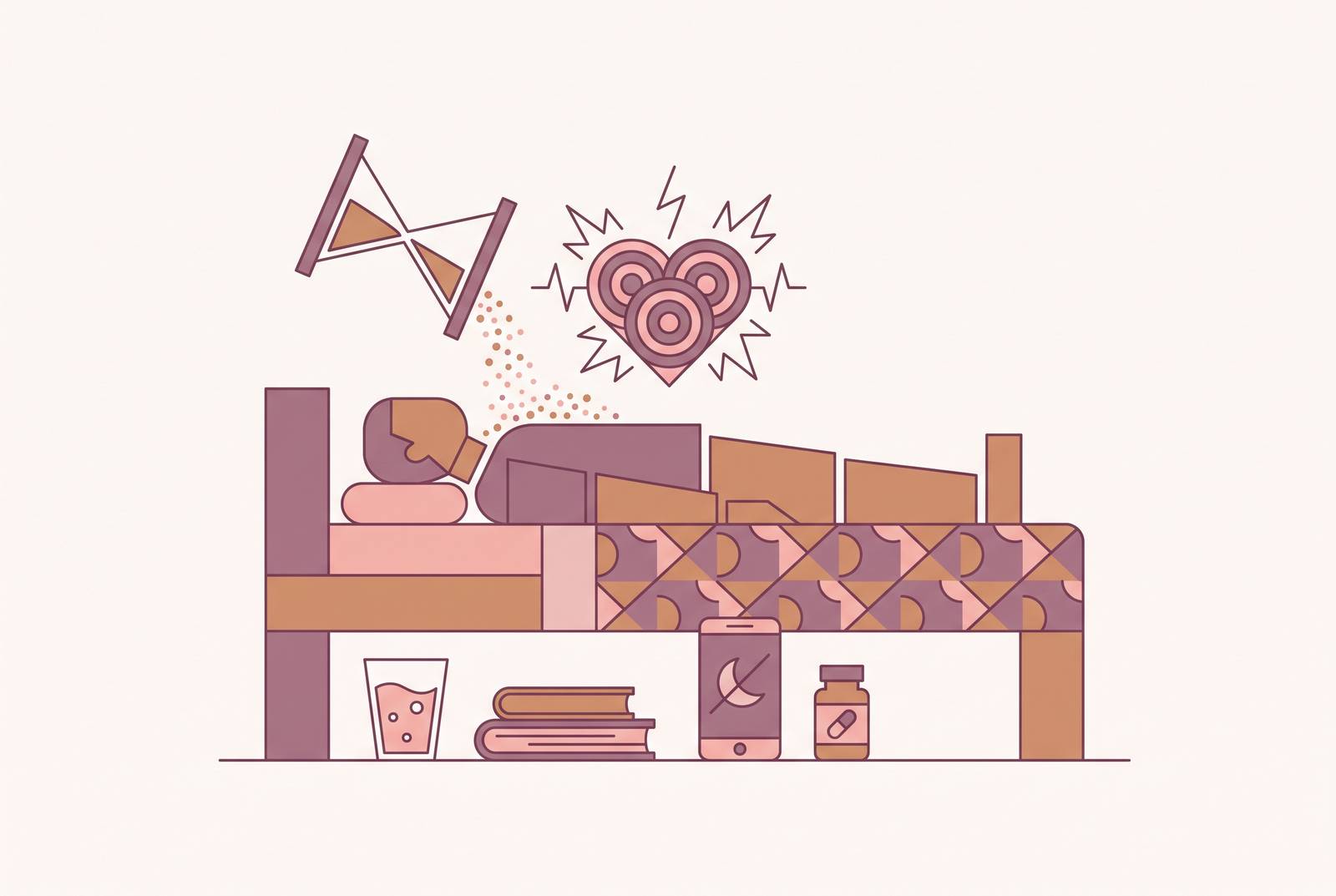
Sleep disruption in POTS is not a side effect of feeling unwell. It comes from autonomic dysregulation that keeps running after the lights go off. Sleep takes real work from the nervous system: it has to manage heart rate changes across each sleep stage, adjust blood pressure, cool the body down, time hormone release, and move the brain through light sleep, deep sleep, and REM in the right order. Any one of these jobs can misfire when the autonomic system isn't working the way it should, and in POTS, several of them misfire at once.
The sympathetic nervous system, the branch that handles alertness and the fight-or-flight response, doesn't quiet down at night in people with POTS. It stays active, pushing the body into what's often called a hyperadrenergic state, even while the person is lying still trying to sleep. That ongoing activation breaks up sleep from the inside. Sleep lab studies back this up directly: patients with POTS spend a significantly higher share of the night in stage 2, or light, sleep compared to people without the condition. That pattern is the signature of a nervous system that can't downshift into deeper rest.
Cortisol tells much of the same story. In a well-regulated system, cortisol rises sharply in the morning to help a person wake up and feel alert, then falls steadily through the day so the body can wind down by bedtime. In POTS, that curve flattens and shifts: the morning rise is often blunted, and evening levels stay higher than they should. Cortisol is supposed to drop at sleep onset, climb a bit during brief nighttime awakenings and light stage 1 arousals, and hit its lowest point during deep slow-wave sleep. When a person wakes up often during the night, cortisol has more chances to spike, and those spikes make it harder to fall back into deep sleep. The cycle feeds itself: frequent waking keeps cortisol up, and elevated cortisol makes further waking more likely. This hormonal pattern produces the exhausted-but-can't-sleep feeling so many people with POTS describe, lying awake dead tired but unable to drift off.
Outside factors can make this worse. Chronic noise and light pollution suppress melatonin release, the hormone that helps trigger sleep. For someone whose autonomic system is already struggling to manage its own internal signals, adding external disruption to the mix compounds the problem.
What disrupted sleep architecture does to POTS symptoms
The consequences of this disrupted sleep appear in measurable ways, visible in more than how a person feels the next morning. Research using sleep lab monitoring found that POTS patients scored significantly worse on standard sleep quality questionnaires and spent significantly more time in stage 2 light sleep than control subjects. That finding matters because it shows the issue sits in the structure of sleep itself, not simply in how many hours someone manages to log.
Too much time in light sleep and too little in deep or REM sleep means the body never finishes the repair work sleep is supposed to do. The racing heart, the exhaustion, and the brain fog that so many people with POTS live with are symptoms of the condition itself and also what happens when the previous night's sleep failed to do its job.
This isn't a rare complaint among POTS patients. A review of 152 medical records found that nearly a third had documented sleep disturbances, and close to half reported severe fatigue. Quality of life research puts the impact in sharp terms: POTS patients report health-related quality of life impairment on par with people living with congestive heart failure or COPD, meaning sleep complaints in POTS deserve the same seriousness as any other major chronic illness symptom rather than being treated as something secondary to manage later.
Part of what keeps sleep disruption under-addressed is the path most POTS patients walk before diagnosis. In the Australian POTS Patient Registry, which tracked 500 patients, a substantial majority had their physical symptoms attributed to anxiety before they received an accurate diagnosis. The average patient saw 5.2 physicians before getting there. Years spent being told the problem is in their head teach people to downplay or skip over symptoms like poor sleep when they finally do get a doctor's attention, saving their limited appointment time for symptoms that feel more urgent or more likely to be believed.
The environmental fixes that address the autonomic root cause
Once the mechanism is clear, the fixes that follow aren't generic sleep hygiene tips pulled from a wellness list. They target the specific physiological problems autonomic dysfunction creates at night: depleted blood volume, a sympathetic nervous system stuck in overdrive, and a body that struggles to regulate its own temperature.
Temperature is one of the clearest examples. Falling asleep normally depends on a drop in core body temperature, and a cool bedroom supports that drop. People with POTS often have trouble regulating temperature on their own, so a cooler room helps the body do something it may not manage reliably by itself.
Noise and light work the same way. Chronic noise exposure and light pollution interfere with melatonin secretion, and melatonin disruption adds strain to an autonomic system that's already struggling to balance itself. Blackout curtains, white noise machines, and a dark, quiet room aren't cosmetic additions to a bedtime routine. For someone with POTS, they address a documented physiological vulnerability.
Sleep position is a smaller, more personal variable. Some patients report that sleeping on the left side eases the sensation of palpitations at night. The evidence here is limited and anecdotal rather than established science, but it costs nothing to try, and for some people it makes a noticeable difference.
Timing salt, fluids, and food to protect overnight autonomic stability
What a person with POTS eats and drinks, and when, shapes the autonomic environment they're trying to sleep in. A recent letter in a medical journal pointed to diet and environment as influences on POTS sleep quality that remain underexplored in the research, even though the underlying mechanisms are plausible and the changes involved carry little to no downside.
Salt and fluid intake sit at the center of standard POTS management, since both help support blood volume. The timing matters as much as the amount. Loading up on fluids and salt late in the evening sets up a trade-off: better blood volume support, but a higher chance of waking repeatedly to use the bathroom. Spreading that intake earlier in the day protects blood volume without paying for it in fragmented sleep later.
Meal composition and timing follow a similar logic. High-fat meals may affect sleep architecture and increase nighttime awakenings. A large, heavy meal eaten close to bedtime pulls blood flow toward digestion, which can trigger a sympathetic nervous system response right when the body should be settling down. Shifting the day's biggest meal earlier, and keeping the evening meal lighter, removes one more source of nighttime sympathetic activation.
Caffeine and alcohol in the evening work against the body in two ways at once: they sustain sympathetic activity, and they interfere with the natural cortisol wind-down described earlier. Cutting them out in the hours before bed isn't a routine suggestion borrowed from general sleep advice. It follows directly from the hormonal mechanism already at play in POTS.
Diet changes can reach further than blood volume alone. Gluten-free eating patterns have shown potential for easing certain gastrointestinal and vasomotor symptoms in POTS. Since gastrointestinal discomfort is one of the physical sensations patients report as keeping them awake at night, a dietary change aimed at daytime symptoms may carry a sleep benefit as a side effect. None of this is settled science yet, but the mechanisms line up, and the risk of trying is low.
Resetting the cortisol rhythm through behavioral consistency
Cortisol dysrhythmia behaves like a rhythm that's lost its timing cues, and rhythms respond to consistent signals. Behavioral consistency, a steady wake time and a calm, predictable wind-down each evening, is one of the few tools that works on the hormonal root of POTS sleep disruption.
Waking at the same time every day, even after a terrible night, tells the body when to expect its cortisol peak. Hitting snooze repeatedly, or letting wake time drift from one day to the next, removes that cue and flattens the morning rise the body relies on to start the day's rhythm. Evenings matter just as much. Screens and bright light in the hours before bed keep cortisol elevated at the exact moment it needs to start falling, through the same melatonin-suppression pathway involved in the circadian disruption described earlier. A dark, quiet, low-stimulation evening routine works directly on a hormonal mechanism.
Meditation and mindfulness practice can lower average cortisol load across the day, but people with elevated cortisol often find meditation especially hard, and conclude they're failing at it when their mind won't settle. That difficulty is a predictable result of being in a hyperaroused state, and the benefit tends to build slowly over weeks of practice.
None of this resets overnight. These changes work over weeks and months, gradually nudging the cortisol rhythm toward something more functional. That's a hard truth to sit with when the nights are already rough and the reward feels far off, but it's also the reason so many people give up on these habits before they've had a chance to work. Treating this as a long game, rather than expecting results in a week, is part of what makes it sustainable.
Pacing and energy management as sleep protection, not just daytime strategy
How a person spends their energy during the day directly shapes how they sleep that night, which makes pacing a sleep strategy, not a separate daytime concern. Overexertion is one of the most direct triggers behind the worst nights of sleep in POTS.
Post-exertional malaise, a worsening of symptoms after even minor physical or mental effort, often doesn't show up right away. It can take hours, or even a full day, to hit. That delay means the worst sleep often follows a day that felt fine at the time, with the body only registering the cost later that night. Recognizing that lag is useful on its own: a bad night doesn't always point to something that happened that same day. Sometimes the cause sits a day or two back.
Spoon Theory, the idea that every activity draws from a limited daily reserve, gives patients language for a kind of rationing that otherwise stays invisible even to themselves. Applied to sleep, it offers a reason to protect the evening's remaining energy rather than spend it on one more task that feels doable in the moment. Qualitative research on POTS patients backs this up: pacing activity and adjusting daily schedules rank among the coping strategies patients find most helpful.
Exercise fits into this picture too, carefully. Recumbent forms of exercise, like rowing, swimming, or recumbent cycling, with heart rate kept in a carefully controlled range at the start, count among the most effective long-term interventions for POTS and can improve sleep over time. The key word is careful. Overdoing it during exercise can itself trigger a bad night, so building up slowly protects against that setback while starting too fast risks it.
Tracking symptoms and sleep patterns to find what helps
Every intervention described so far affects different people differently, because POTS sleep disruption has multiple causes acting at once. Tracking is how a person figures out which of these fixes actually makes a difference for their own body.
A simple daily log, covering sleep quality alongside activity level, fluid and salt intake, meal timing, stress, and medications, turns scattered nights into a pattern that can actually be read. Because post-exertional malaise can take a day or two to appear, the cause of a bad night is often visible earlier in the log, not on the night itself. Without written records, that connection is nearly impossible to spot.
Wearable devices add another layer: heart rate during sleep, heart rate variability, skin temperature. This data has real value, but heart rate readings in POTS depend heavily on body position, so the numbers mean more when paired with notes on symptoms than when read as a number on their own.
Tracking matters because of the pattern the log reveals over days and weeks: which nights were worst, what came before them, what seemed to help. That pattern is also far more useful to bring into a medical appointment than a general statement like "I sleep badly most of the time." Specific nights, specific triggers, and specific correlations give a clinician something to act on.
Taking sleep disruption to your clinical team
Sleep disruption in POTS deserves a direct place in medical appointments, not a passing mention squeezed in at the end. Getting a clinician to take it seriously usually depends on showing up with specifics.
Many patients never raise sleep as a primary concern. Part of the reason traces back to the diagnostic odyssey described earlier: in the Australian POTS Patient Registry, 64.6% of patients had their physical symptoms attributed to anxiety before an accurate diagnosis, which teaches people to lead with symptoms they expect to be taken seriously and leave sleep for later. Part of it is simply that "I don't sleep well" feels too vague to act on, for the patient and the clinician alike. A tracked pattern fixes that problem directly, turning a vague complaint into something concrete enough to discuss.
A referral to a sleep specialist, or a formal sleep study using polysomnography, makes sense when non-restorative sleep continues despite consistent behavioral and environmental changes. Patients can ask for this directly.
The psychological side of this deserves equal attention. Grief, anxiety, and somatic hypervigilance, the heightened awareness of palpitations or other body sensations, are real and physiologically grounded contributors to POTS sleep disruption, not signs of an overactive imagination. A therapist experienced in chronic illness, particularly one trained in cognitive behavioral therapy for insomnia (CBT-I), can address the hyperarousal piece of this puzzle that behavioral routines alone often can't fully resolve. Environmental changes, diet timing, and consistent routines all help, but they work best as part of a broader plan built together with a clinical team that understands what POTS is actually doing to the body overnight.
Sources
- Diet and environment: unexplored influences on sleep quality in postural orthostatic tachycardia syndrome (POTS) - PMC
- Sleep Disturbances and Autonomic Dysfunction in Patients with Postural Orthostatic Tachycardia Syndrome
- Sleep Disturbances in Postural Orthostatic Tachycardia Syndrome (POTS): A Polysomnographic and Questionnaires Based Study (P05.206)
- Sleep Disturbances and Autonomic Dysfunction in Patients with Postural Orthostatic Tachycardia Syndrome - PMC
- A survey based study on sleep disturbance in postural tachycardia syndrome - ScienceDirect